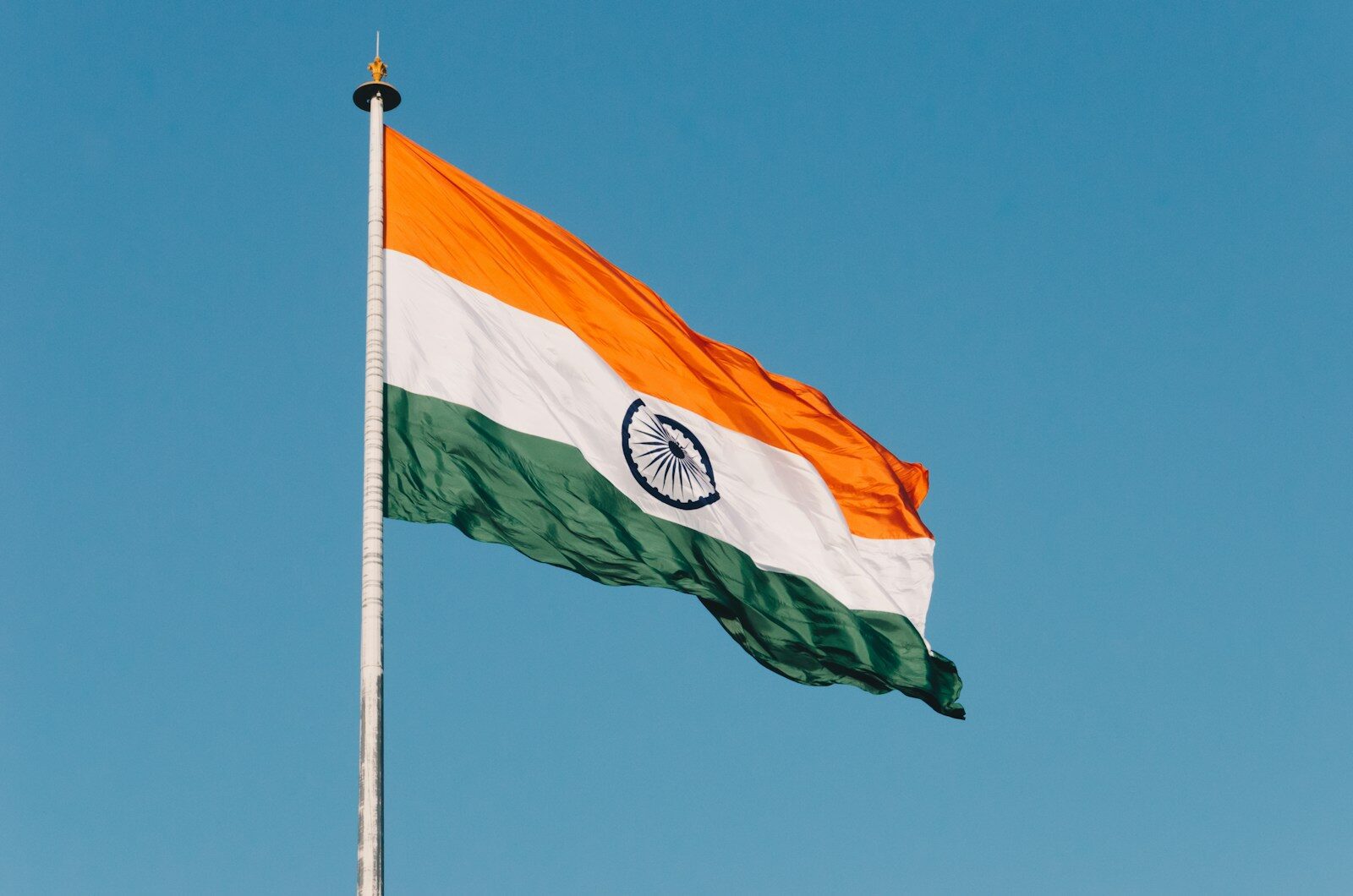
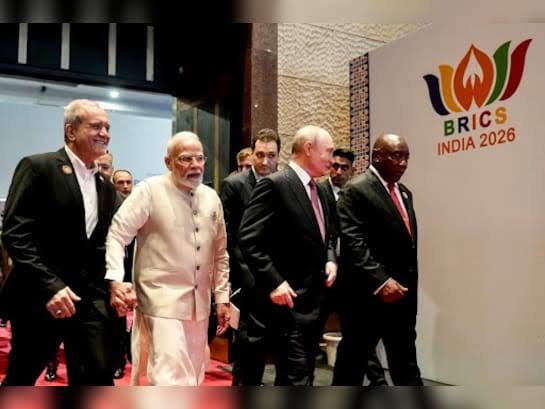
The BRICS Summit 2026 began in New Delhi on September 12 against the backdrop of major geopolitical conflicts and growing tensions among several member countries. Prime Minister Narendra Modi is hosting Russian President Vladimir Putin, Chinese President Xi Jinping, Iranian President Masoud Pezeshkian and leaders from the expanded 11-member grouping. The summit is focused on trade, investment and global conflicts, while also testing BRICS’ ability to find common ground on difficult international issues.
The BRICS Summit 2026 comes at a particularly complicated moment for the grouping. Wars in Ukraine and the Middle East, along with rising tensions between the United States and China, have created divisions among BRICS members. Although the group seeks to present itself as an important voice for emerging economies and the Global South, its members have different strategic interests and relationships with major world powers.
The BRICS Summit 2026 is particularly significant for India because New Delhi is attempting to maintain relationships with countries on different sides of major geopolitical disputes. India has longstanding strategic ties with Russia and maintains important relations with Iran, while at the same time strengthening its economic, defence and technology partnerships with the United States and other Western countries. This balancing approach is central to India’s diplomatic strategy at the summit.
The BRICS Summit 2026 also comes at a time when the conflict involving Iran has become one of the biggest challenges for the expanded grouping. Iran is now a BRICS member, while Saudi Arabia and the United Arab Emirates are also part of the expanded bloc. Their different positions and interests in the Middle East make it difficult for BRICS to develop a unified response to the conflict.
The BRICS Summit 2026 has placed the Middle East crisis high on the international agenda. BRICS leaders expressed concern about escalating violence and condemned attacks on civilian infrastructure and peaceful nuclear facilities protected under international safeguards. Their joint statement also stressed the importance of nuclear safety and security during armed conflicts.
The BRICS Summit 2026 also saw member countries criticise unilateral sanctions that have not been authorised by the United Nations Security Council. Although the joint statement did not name specific countries, the issue has particular relevance for Russia, which has faced extensive Western sanctions following its invasion of Ukraine. BRICS leaders called for the removal of measures they described as inconsistent with international law and the principles of the UN Charter.
The BRICS Summit 2026 is also important because the grouping has expanded significantly from its original membership. BRICS was initially formed by Brazil, Russia, India and China, with South Africa joining later. It has now grown to 11 members, giving it a much larger share of the world’s population, resources and economic output. The expansion has increased the group’s global influence but has also made consensus more difficult.
The BRICS Summit 2026 therefore represents a test of whether the expanded organisation can translate its growing economic weight into coordinated diplomatic action. The countries share an interest in increasing the influence of emerging and developing economies in global institutions, but they do not necessarily agree on individual conflicts or on their relationships with the United States and other Western powers.
The BRICS Summit 2026 is especially important for Prime Minister Narendra Modi, who has sought to prevent the grouping from being portrayed simply as an anti-Western alliance. Modi said BRICS is not against anyone and argued that the Global South should move from being primarily a rule-taker to becoming a rule-shaper in global governance. His position reflects India’s preference for a broader and more inclusive international role for BRICS.
The BRICS Summit 2026 also reflects India’s effort to strengthen its position as a bridge between different geopolitical blocs. New Delhi has maintained close relations with Moscow despite the Ukraine war, continued engagement with Tehran despite tensions between Iran and the United States, and simultaneously expanded cooperation with Washington and European countries. This gives India an unusually complex diplomatic position within BRICS.
The BRICS Summit 2026 has also provided an opportunity for India and Russia to reinforce their longstanding partnership. Modi held talks with Putin in New Delhi before the summit, with both sides discussing bilateral relations as well as conflicts affecting maritime trade and the safety of Indian seafarers. India and Russia agreed to remain engaged in strengthening their special and privileged strategic partnership.
The BRICS Summit 2026 also includes an important India-China dimension. Chinese President Xi Jinping’s visit to India is his first in seven years and comes during a gradual improvement in relations between the two Asian powers. Flights, visas and high-level diplomatic contacts have increasingly resumed following years of tensions after the deadly 2020 border clash.
The BRICS Summit 2026 has therefore created an important platform for Modi and Xi to continue efforts toward stabilising India-China relations. Their engagement is significant because the two countries are major economic powers and founding members of BRICS. Better bilateral relations could make it easier for the two sides to cooperate within the grouping, although major strategic and border differences remain unresolved.
The BRICS Summit 2026 also comes after an earlier setback in May, when BRICS foreign ministers failed to reach agreement on a joint statement concerning the Iran war. India was consequently forced to issue a chair’s summary. That episode demonstrated how difficult it can be for the expanded group to achieve consensus when members have conflicting positions on major geopolitical questions.
The BRICS Summit 2026 is consequently being watched for whether leaders can produce a joint declaration that reflects enough common ground among the members. Achieving consensus would allow India to demonstrate that the expanded grouping can operate effectively despite its internal differences. Failure to reach agreement on major issues, however, could highlight the limitations created by BRICS’ increasingly diverse membership.
The BRICS Summit 2026 also focuses on economic cooperation. The grouping has increasingly discussed alternatives to Western-dominated financial institutions and ways of increasing economic cooperation among developing countries. Iran has advocated greater use of national currencies for trade between BRICS members, while Russia and China have supported efforts to reduce dependence on Western financial systems.
The BRICS Summit 2026 could therefore influence discussions about international payments and financial cooperation. However, developing a common alternative financial architecture among countries with different economic systems and monetary policies would be a complicated process. India’s position is likely to remain focused on increasing practical economic cooperation without allowing BRICS to become exclusively defined by opposition to Western institutions.
The BRICS Summit 2026 also highlights the growing importance of maritime security. The disruptions caused by conflicts in the Middle East have affected shipping routes and increased risks for seafarers. Modi proposed a BRICS seafarers’ network aimed at strengthening the safety and welfare of maritime workers, particularly as instability in the region creates new challenges for international shipping.
The BRICS Summit 2026 has also brought significant security arrangements to New Delhi. Thousands of police and paramilitary personnel have been deployed around the summit venue and other parts of the capital, while traffic restrictions and diversions have been introduced. The scale of the arrangements reflects the importance of the gathering and the presence of several high-profile international leaders.
The BRICS Summit 2026 is taking place as the Iran conflict continues to create uncertainty across the Middle East. Concerns have also grown about the possibility of the conflict expanding amid tensions involving Saudi Arabia and Yemen’s Houthi rebels. Such developments have economic consequences because the region is critical to global energy supplies and maritime trade.
The BRICS Summit 2026 is therefore directly connected to India’s economic concerns as well. India depends heavily on imported energy and maintains extensive trade and investment relationships with Gulf countries. Any prolonged disruption to shipping or energy supplies could increase costs for Indian businesses and consumers, making diplomatic efforts toward regional stability particularly important for New Delhi.
The BRICS Summit 2026 also gives China and Russia an opportunity to push their vision of a more multipolar international system. Putin has argued for greater representation of Asia, Africa and Latin America in the UN Security Council and has criticised sanctions, tariffs and other measures that he says are used to limit the influence of emerging powers.
The BRICS Summit 2026 shows that Russia and China view the organisation as an important platform for challenging aspects of the existing global order. India shares some concerns about the under-representation of developing countries in global institutions, but New Delhi has been more cautious about presenting BRICS as a direct counterweight to the United States or Western alliances.
The BRICS Summit 2026 is consequently shaped by different visions within the same organisation. Russia and China want BRICS to play a stronger role in creating a multipolar world, Iran is interested in reducing the impact of Western sanctions, and India is seeking a more balanced role that promotes the interests of developing countries without creating another rigid geopolitical bloc.
The BRICS Summit 2026 also demonstrates how the grouping’s expansion has created both opportunities and challenges. The inclusion of countries from different regions has increased BRICS’ economic and political reach, but it has also introduced competing interests. The presence of Iran, Saudi Arabia and the UAE within the same organisation is one example of how difficult it can be to establish a single position on regional conflicts.
The BRICS Summit 2026 may nevertheless provide opportunities for practical cooperation even when political disagreements remain. Trade facilitation, investment, infrastructure, technology, energy security and financial cooperation are areas where member states can potentially find common interests. A focus on these issues could allow the organisation to maintain momentum despite disagreements over international conflicts.
The BRICS Summit 2026 also comes at a time when India is trying to strengthen its role as an important voice of the Global South. Modi has argued that developing countries should have greater influence in shaping international rules rather than simply accepting decisions made by established powers. India’s hosting of the summit provides New Delhi with an opportunity to promote this agenda on a major international platform.
The BRICS Summit 2026 could therefore become an important moment in India’s broader foreign-policy strategy. New Delhi wants stronger relations with Western economies while preserving longstanding partnerships with Russia and maintaining engagement with Iran and other countries. Hosting the summit allows India to demonstrate that these relationships can coexist within its policy of strategic autonomy.
The BRICS Summit 2026 will also be closely watched for developments in India-China relations. If Modi and Xi are able to maintain the recent diplomatic momentum, it could create additional space for economic and political engagement between the two countries. However, progress will depend on continued management of their border dispute and other strategic differences.
The BRICS Summit 2026 ultimately demonstrates the complicated reality of a rapidly changing global order. The grouping has become larger and more influential, but its members do not always share the same geopolitical objectives. Wars in Ukraine and the Middle East, tensions between Washington and Beijing and competing regional interests have made consensus increasingly difficult.
The BRICS Summit 2026 is therefore more than an economic gathering. It is a test of whether a diverse group of emerging economies can coordinate on major global challenges while managing their own strategic differences. For India, the summit is also an opportunity to demonstrate diplomatic flexibility and promote a vision of BRICS that is focused on cooperation rather than confrontation.
The BRICS Summit 2026 could ultimately strengthen the organisation if its members succeed in finding common ground on trade, development, global governance and peace. At the same time, continued disagreement over wars and sanctions could expose the limitations of the expanded bloc. The results of the New Delhi summit will therefore be important not only for BRICS but also for India’s evolving position in global diplomacy.