Buying an electric car under ₹20 lakh in India has become considerably more interesting in 2026. The segment now includes compact EVs, electric SUVs, crossovers and premium models that offer substantially more range and equipment than the first generation of affordable electric cars.
The challenge is no longer simply finding an EV that fits the budget. Buyers have to decide how much range they actually need, whether home charging is available, how often they travel on highways, how much luggage space their family requires and whether the higher upfront price makes financial sense compared with a petrol, CNG or hybrid car.
The current market includes options such as the Tata Punch EV, Tata Nexon EV, MG Windsor EV, Mahindra XUV 3XO EV, Maruti Suzuki e Vitara, Hyundai Creta Electric and Mahindra BE 6, although some higher variants of these models cross the ₹20 lakh threshold. Current listings also show the Tata Curvv EV and VinFast VF 6 entering or approaching this price bracket depending on variant and pricing. (V3Cars)
This guide focuses on electric cars under ₹20 lakh in India in 2026, with emphasis on claimed range, battery size, charging, practicality, comfort, performance and the type of buyer each EV suits.
Price note: ₹20 lakh refers to the ex-showroom purchase budget. On-road pricing varies by state, insurance, registration and variant. EV prices, variants and battery configurations can change, so buyers should verify the exact version before booking.
Best Electric Cars Under ₹20 Lakh: Quick Comparison
| EV | Best For | Battery Options | Claimed Range* |
|---|---|---|---|
| Tata Nexon EV | All-round compact SUV | 30 / 45 kWh | Up to 489 km |
| MG Windsor EV | Family comfort | 38 / 52.9 kWh | Up to 449 km |
| Mahindra XUV 3XO EV | Compact SUV buyers | 39.4 kWh | Up to 456 km |
| Tata Punch EV | Urban driving | 30 / 40 kWh class | Up to 468 km |
| Maruti Suzuki e Vitara | Family SUV | 49 / 61 kWh | Up to 543 km |
| Hyundai Creta Electric | Premium family SUV | 42 / 51.4 kWh | Up to 473–510 km* |
| Mahindra BE 6 | Performance and range | 59 / 79 kWh | Up to 682 km |
| Tata Curvv EV | Style and highway range | 45 / 55 kWh | Up to 502 km |
| Tata Tiago EV | Budget urban EV | 19.2 / 24 kWh | Up to 315 km |
| MG Comet EV | Short-distance city use | 17.3 kWh | Around 230 km |
*Claimed figures vary by variant and testing standard. They should not be treated as guaranteed real-world range. For example, the Nexon EV’s 45kWh version is listed with a claimed range of up to 489km, while Autocar India reports around 375km in its real-world assessment. (Autocar)
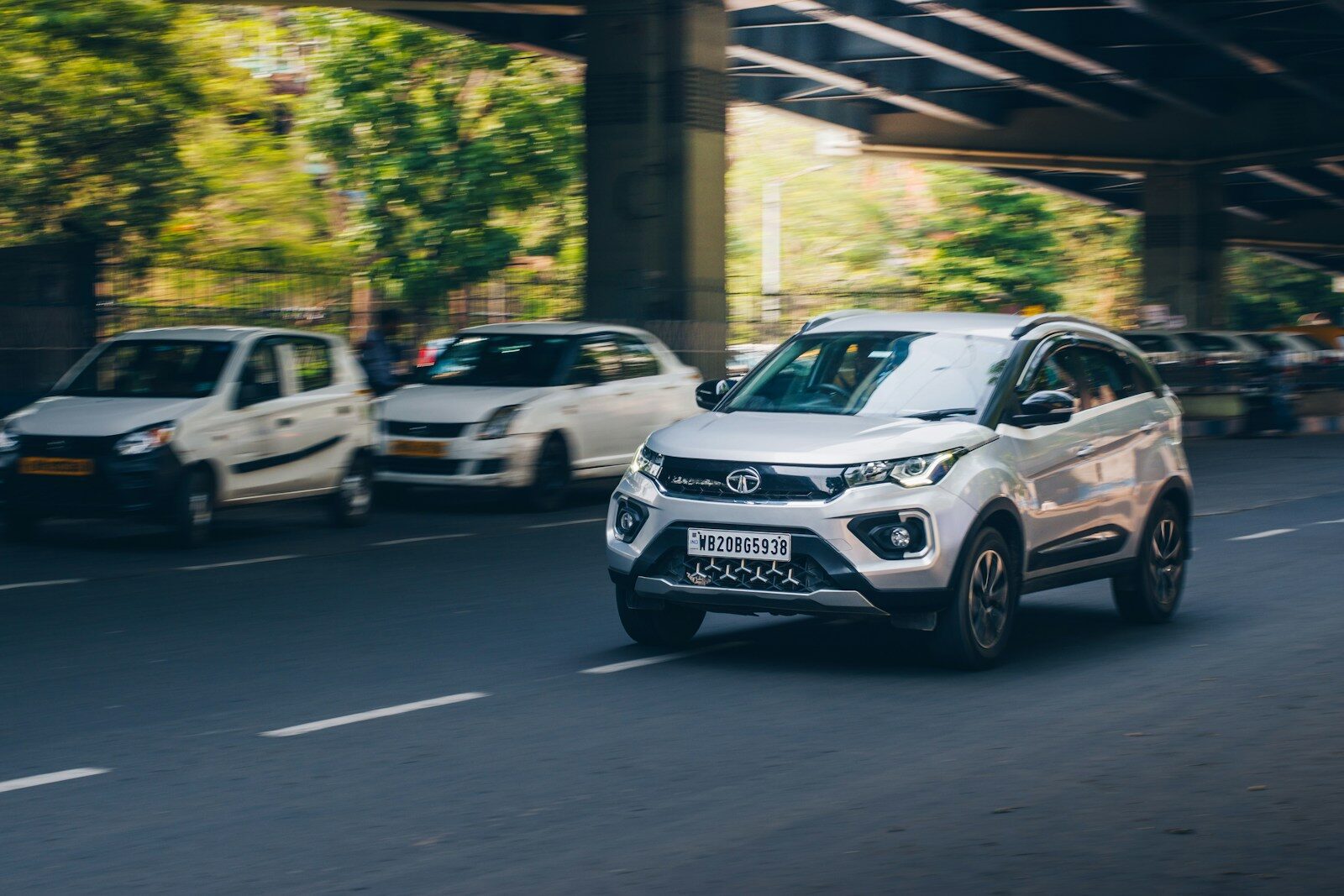
1. Tata Nexon EV — Best Overall Electric SUV Under ₹20 Lakh
The Tata Nexon EV remains one of the most important choices for Indian buyers entering electric SUV ownership.
Its biggest advantage is balance. It is compact enough for city driving, large enough for family use and available with different battery capacities.
The current Nexon EV is offered with 30kWh and 45kWh battery options, with the larger battery claiming up to 489km under the applicable test cycle. The 45kWh version produces up to 142hp and 215Nm according to current specifications. (Autocar)
Why choose the Nexon EV?
The Nexon EV is particularly attractive if you want an EV that doesn’t require you to make major compromises.
It has enough performance for normal city driving and highway use, while its compact SUV dimensions make it relatively easy to manoeuvre.
The larger battery is especially interesting for buyers who occasionally travel longer distances.
Best for
- Small families
- City commuters
- First-time EV buyers
- Buyers wanting an electric SUV
- People with home charging
- Buyers who want multiple battery options
Charging considerations
The larger-battery version supports DC fast charging, which can significantly reduce charging time during highway travel compared with conventional AC charging.
However, home charging should still be the foundation of your EV ownership if possible.
Real-world range matters
This is one area where buyers should be careful.
The claimed 489km figure does not mean you will drive 489km on every charge.
Autocar India’s current information puts real-world range for the 45kWh version at around 375km, illustrating why buyers should maintain a practical buffer rather than planning trips around the brochure figure. (Autocar)
Best suited for: Buyers looking for a balanced electric SUV with a broad range of variants.
2. MG Windsor EV — Best for Family Comfort
The MG Windsor EV takes a different approach from the conventional compact SUV.
It is more crossover-like and focuses heavily on cabin space and passenger comfort.
The current model is available with battery options around 38kWh and 52.9kWh, with the larger version claiming up to 449km. (Autocar)
Why choose the Windsor EV?
The Windsor’s biggest advantage is interior space.
For families who regularly carry rear passengers, this can be more important than outright acceleration.
Autocar India’s current comparison describes the Windsor as particularly practical for chauffeur-driven city use because of its rear-seat comfort and space. (Autocar)
Battery-as-a-Service option
One unusual feature of the Windsor is MG’s Battery-as-a-Service approach on applicable variants.
Instead of paying the entire battery cost upfront, buyers can use a lower initial vehicle price while paying a separate battery usage charge.
This changes the economics of the vehicle, so buyers should calculate the total ownership cost rather than looking only at the headline purchase price.
Best for
- Family use
- Rear-seat passengers
- Urban commuting
- Chauffeur-driven owners
- Buyers who want a spacious EV
Limitations
The Windsor isn’t necessarily the most engaging EV to drive.
Its strength is comfort and practicality rather than sporty handling.
Best suited for: Families that place cabin space and rear-seat comfort above aggressive driving performance.
3. Mahindra XUV 3XO EV — Best Compact Electric SUV for Value
The electric XUV 3XO brings Mahindra’s compact SUV platform into the EV market.
Current 2026 market listings place the model within the ₹20 lakh bracket, with a 39.4kWh battery and claimed range around 456km. (V3Cars)
Why choose it?
The XUV 3XO EV is interesting because it gives buyers the familiar proportions of a compact SUV while moving to electric power.
It should appeal particularly to buyers who like the practicality of a compact SUV but don’t want to move into a much larger vehicle.
Best for
- Urban SUV buyers
- Small families
- Buyers wanting an EV under ₹15 lakh
- People transitioning from petrol SUVs
- City and occasional highway use
What to consider
As with every EV, the actual range depends on driving conditions.
Highway speeds generally consume more energy than moderate-speed urban driving, while heavy air-conditioning use, traffic and load can also affect efficiency.
Best suited for: Buyers looking for a compact electric SUV without moving into the premium ₹20 lakh-plus segment.
4. Tata Punch EV — Best Compact EV for City Driving
The Tata Punch EV is particularly well suited to urban buyers.
Its compact dimensions make it easy to park and manoeuvre, while the higher seating position gives it SUV-like appeal.
Current market data lists battery options around 30kWh and 40kWh, with the larger configuration offering a claimed range of up to around 468km depending on variant and test cycle. (V3Cars)
Why choose the Punch EV?
The Punch EV makes sense for people whose daily driving is predictable.
If you travel 30–50km every day and can charge at home overnight, an EV like the Punch can be extremely convenient.
You don’t need to visit a fuel station every few days.
Best for
- City commuters
- Small families
- First-time EV buyers
- Buyers with limited parking
- People wanting a compact electric SUV
Limitations
The Punch’s smaller size means it cannot provide the same rear-seat and boot experience as larger EVs.
If your family frequently travels with five adults and luggage, test the car carefully before purchasing.
Best suited for: Urban buyers who want an affordable and compact electric SUV.
5. Maruti Suzuki e Vitara — Best Family EV SUV for Long Range
The Maruti Suzuki e Vitara is one of the most significant additions to India’s EV market because it brings Maruti Suzuki into the mainstream electric SUV space.
Current listings show battery options around 49kWh and 61kWh, with the larger battery claiming up to approximately 543km depending on configuration. (V3Cars)
Why choose the e Vitara?
The e Vitara is aimed at buyers who want a conventional family SUV experience with electric propulsion.
Its larger battery options make it more appropriate for people who occasionally undertake longer journeys than a small city EV.
Best for
- Families
- SUV buyers
- Long-distance users
- Buyers wanting a larger battery
- Drivers who prefer established mass-market ownership
Important consideration
The entry price can fit within ₹20 lakh depending on the variant, but higher battery and equipment combinations can cross the budget.
Therefore, compare the exact variant rather than assuming the entire e Vitara range costs below ₹20 lakh.
Best suited for: Family buyers who want a mainstream electric SUV with a larger battery option.
6. Hyundai Creta Electric — Best Premium Family EV
The Hyundai Creta Electric brings the familiar Creta nameplate into the EV market.
It is positioned above smaller electric SUVs and offers a more premium family-car experience.
Current listings show 42kWh and 51.4kWh battery options, with claimed range figures reaching roughly 473–510km depending on variant and testing methodology. (Autocar)
Why choose the Creta Electric?
The biggest reason is the combination of premium cabin experience and SUV practicality.
For buyers who are already considering a higher-end petrol or hybrid SUV, the Creta Electric provides an opportunity to move to electric power without downsizing significantly.
Performance
The 51.4kWh version is listed with up to around 171hp and 255Nm in current comparison data. (Autocar)
That gives it considerably more performance potential than basic city-focused EVs.
Best for
- Families
- Premium SUV buyers
- Highway users
- Technology-focused buyers
- Drivers wanting stronger performance
Limitations
The exact variant that fits within ₹20 lakh depends on current pricing.
Higher trims can move substantially beyond the budget.
Best suited for: Buyers who want a more premium electric SUV experience and are comfortable choosing an entry-level or mid-level variant.
7. Mahindra BE 6 — Best for Performance and Long Range
The Mahindra BE 6 is one of the most performance-oriented electric SUVs in this broad price category.
Its larger battery configurations provide exceptionally high claimed range figures, with current listings showing up to around 682km for the largest battery. (V3Cars)
However, only selected variants fall below ₹20 lakh.
Why choose the BE 6?
The BE 6 is aimed at buyers who want more than basic electric transportation.
Its styling, performance focus, technology and battery capacity make it considerably more ambitious than entry-level EVs.
The 59kWh version is listed with a claimed range of around 557km in current 2026 data, while the larger 79kWh battery offers a substantially higher claimed figure. (EV Index India)
Charging
One of its biggest advantages is fast-charging capability.
Current data lists DC fast charging support up to 175kW on applicable versions. (EV Index India)
This can be particularly valuable for highway users who want shorter charging stops.
Best for
- Driving enthusiasts
- Highway users
- Technology-focused buyers
- Buyers wanting long range
- People who value performance
Limitations
The entry-level variant may not offer the same equipment and battery capacity as higher versions.
Also, real-world range will always be lower than the maximum certified figure under many driving conditions.
Best suited for: Buyers who want an electric SUV with strong performance and long-range capability.
8. Tata Curvv EV — Best Electric SUV-Coupe Under ₹20 Lakh
The Tata Curvv EV is aimed at buyers who want something visually different from a conventional compact SUV.
Its coupe-inspired roofline gives it a more distinctive appearance while retaining SUV proportions.
Current listings show 45kWh and 55kWh battery options, with claimed range figures reaching around 502km depending on configuration. (V3Cars)
Why choose the Curvv EV?
The Curvv EV is particularly interesting for buyers who want design to play a significant role in their purchase decision.
It also offers a larger battery than the entry-level Nexon EV, making it attractive for buyers who regularly travel longer distances.
Best for
- Style-focused buyers
- Small families
- Highway users
- Buyers wanting a larger EV
- Drivers who want something different from conventional SUVs
Limitations
The sloping roof can influence rear-seat headroom and luggage usability compared with a more upright SUV.
If practicality is more important than styling, compare it carefully with the Nexon EV, Windsor and e Vitara.
Best suited for: Buyers who want electric SUV practicality with a more distinctive design.
9. Tata Tiago EV — Best Budget Electric Car
The Tata Tiago EV remains one of the most accessible ways to enter electric-car ownership.
It is smaller than the SUVs in this list and is primarily designed around urban mobility.
Current listings show battery options around 19.2kWh and 24kWh, with claimed range figures reaching approximately 315km depending on version. (V3Cars)
Why choose the Tiago EV?
If your daily driving is limited to the city, you may not need a 500km-range EV.
A smaller battery can be sufficient if you charge at home regularly.
This also keeps the purchase price considerably lower than larger electric SUVs.
Best for
- City commuters
- First-time EV buyers
- Small families
- Buyers with predictable daily driving
- Second-car buyers
Limitations
It isn’t the ideal choice for frequent long-distance highway travel.
The smaller cabin and battery are better suited to urban use.
Best suited for: Buyers who need an affordable EV primarily for city commuting.
10. MG Comet EV — Best Small EV for Short City Trips
The MG Comet EV is completely different from the larger electric SUVs.
It is an ultra-compact city car designed primarily around manoeuvrability and short-distance transportation.
The Comet uses a 17.3kWh battery and has a claimed range of around 230km. (V3Cars)
Why choose the Comet?
The Comet’s biggest advantage is its size.
Parking in crowded Indian cities can be difficult, particularly in older markets and densely populated neighbourhoods.
A tiny EV can make these situations considerably easier.
Best for
- Short urban commutes
- Second-car buyers
- Couples
- Small families
- Buyers with restricted parking
Limitations
It isn’t a conventional family car.
Long highway journeys, large luggage loads and frequent use by four adults aren’t its strongest use cases.
Best suited for: Urban buyers who want an extremely compact second car.
How Much Real-World Range Do You Need?
This is one of the most important questions when buying an EV.
Many buyers assume they need a 500km-plus claimed range.
They may not.
Suppose your daily commute is 40km.
Even a vehicle with a practical usable range of 250–300km can potentially cover several days of commuting before needing a recharge.
On the other hand, someone regularly travelling 300–400km on highways needs a much larger safety margin.
For City Driving
A practical range of around 200–300km can be sufficient for many urban users if home charging is available.
For Mixed City and Highway Driving
A larger battery becomes more useful.
Vehicles with claimed ranges around 400–500km provide more flexibility, although actual highway range will be lower.
For Frequent Long-Distance Travel
Look beyond range.
Fast-charging speed and highway charging infrastructure become equally important.
A car that can charge rapidly at compatible DC chargers may be more convenient than one with slightly more range but slower charging.
Claimed Range vs Real-World Range
Never plan an important highway journey around the maximum claimed range.
EV range can vary substantially according to:
- Driving speed
- Traffic
- Temperature
- Air-conditioning use
- Terrain
- Tyre pressure
- Passenger load
- Luggage
- Driving style
Autocar India’s comparison testing illustrates this difference. Its data for the Hyundai Creta Electric, MG ZS EV and Tata Curvv EV includes tested range figures below their claimed figures. (Autocar)
This is normal.
The claimed figure is useful for comparison, but your personal range is what matters for ownership.
How to Choose the Right EV Battery Size
A larger battery generally gives you more range, but it also increases vehicle cost and weight.
Don’t automatically buy the largest battery available.
Choose a Smaller Battery If:
- Your daily driving is predictable.
- You have home charging.
- Most driving happens in the city.
- You rarely travel long distances.
Choose a Larger Battery If:
- You regularly travel on highways.
- You don’t want to charge frequently.
- Public charging availability along your routes is limited.
- Your daily driving is high.
The ideal battery is the smallest one that comfortably meets your normal requirements with a reasonable reserve.
Home Charging: The Most Important EV Ownership Factor
Before buying an electric car, determine where you will charge it.
If you have dedicated parking with a suitable electrical connection, home charging can make EV ownership extremely convenient.
You can plug the car in after returning home and start the next day with a charged battery.
But apartment residents should investigate:
- Parking allocation
- Electrical connection availability
- Metering
- Charger installation permissions
- Cable routing
- Society rules
- Load capacity
A high-range EV does not solve the problem if you have nowhere convenient to charge it.
AC Charging vs DC Fast Charging
AC Charging
AC charging is generally best suited to overnight or long-duration charging.
It is ideal when the car is parked at home for several hours.
DC Fast Charging
DC fast charging is primarily useful for highway travel and situations where you need to add substantial range quickly.
However, frequent reliance on public fast chargers can be more expensive and less convenient than home charging.
The best ownership setup usually combines home AC charging for routine use with DC fast charging for longer trips.
EV vs Petrol: Which Is Cheaper to Own?
The answer depends on how much you drive and where you charge.
An EV can have a much lower energy cost per kilometre when charged at home, but the initial purchase price can be higher.
A petrol car may cost less to purchase but require substantially more spending on fuel over several years.
The correct calculation should include:
- Purchase price
- Financing
- Electricity cost
- Petrol cost
- Charging cost
- Insurance
- Maintenance
- Tyres
- Battery warranty
- Depreciation
- Annual kilometres
For example, a person driving 25,000km per year has a very different EV financial case from someone driving only 5,000km annually.
EV vs Hybrid: Which Should You Choose?
A strong hybrid can be attractive if you want excellent efficiency without depending on charging infrastructure.
A hybrid can be refuelled like a conventional petrol car and may deliver particularly strong efficiency in city traffic.
An EV can have lower energy costs and zero tailpipe emissions, but it requires access to charging.
Consider an EV if:
- You have convenient charging.
- Most of your driving is predictable.
- You want an electric driving experience.
- You can accept planning longer trips around charging.
Consider a hybrid if:
- You travel frequently on highways.
- Charging access is uncertain.
- You want high efficiency without changing refuelling habits.
- You regularly travel long distances.
Neither technology is automatically right for every buyer.
What Should You Check Before Buying an EV?
1. Calculate Your Daily Driving
Track your actual kilometres for a week.
You may discover that your daily driving is much lower than you assumed.
2. Check Home Charging
This should be one of the first checks, not an afterthought.
3. Check the Exact Battery Variant
A model name doesn’t tell you the battery capacity.
Different variants can have substantially different ranges.
4. Check DC Charging Capability
If you travel long distances, find out:
- Maximum DC charging power
- Approximate charging time
- Compatible charging standards
- Availability of chargers along your routes
5. Evaluate Rear Seats
If the car will be used by a family, spend time in the rear seat.
6. Check Boot Space
EVs can have different floor and battery packaging arrangements.
Check whether your normal luggage fits.
7. Understand the Warranty
Pay attention to:
- Battery warranty
- Motor warranty
- Vehicle warranty
- Charging equipment coverage
Don’t assume all EV warranties are identical.
8. Check Service Support
An EV has fewer conventional engine components, but it still requires servicing.
Check whether an authorised service centre is conveniently located.
Are EVs Good for Long-Term Ownership?
They can be, particularly for buyers with predictable driving patterns and good charging access.
Electric powertrains have fewer moving components than internal-combustion engines, which changes the maintenance profile.
However, buyers should not assume an EV has zero maintenance.
You still need to consider:
- Tyres
- Brakes
- Suspension
- Air-conditioning
- 12V battery
- Software
- Cooling systems
- Charging hardware
Battery health is also important, although buyers should avoid unsupported claims about a specific battery’s lifespan.
Follow the manufacturer’s charging and maintenance recommendations.
Best Electric Cars Under ₹20 Lakh by Buyer Type
Best Overall EV
Tata Nexon EV
A balanced combination of price, size, range and practicality.
Best for Family Comfort
MG Windsor EV
Its spacious cabin and rear-seat comfort make it particularly interesting for families.
Best Compact Electric SUV
Mahindra XUV 3XO EV
A useful option for buyers wanting a compact SUV form factor and electric power.
Best Urban EV
Tata Punch EV
Its compact size makes it well suited to city commuting.
Best Family Electric SUV
Maruti Suzuki e Vitara
A larger SUV with a choice of battery configurations and substantial claimed range.
Best Premium EV SUV
Hyundai Creta Electric
An attractive option for buyers who want a more premium family SUV experience.
Best for Performance
Mahindra BE 6
Particularly interesting for buyers who prioritise performance, technology and long-range capability.
Best for Style
Tata Curvv EV
Its coupe-inspired SUV design makes it distinctive in this segment.
Best Budget EV
Tata Tiago EV
A sensible option for buyers whose driving is predominantly urban.
Best Ultra-Compact City EV
MG Comet EV
Particularly useful as a second car for short urban journeys.
Frequently Asked Questions
Which is the best electric car under ₹20 lakh in India in 2026?
The Tata Nexon EV, MG Windsor EV, Mahindra XUV 3XO EV, Maruti Suzuki e Vitara, Hyundai Creta Electric and selected Mahindra BE 6 variants are among the key options in this price range. The right choice depends on range, space, charging and usage requirements. (V3Cars)
Which EV has the longest range under ₹20 lakh?
The answer depends on the exact variant and pricing structure. Current listings show the Mahindra BE 6’s larger battery with a claimed range of up to around 682km, although higher variants can exceed ₹20 lakh. The Maruti Suzuki e Vitara’s larger battery claims up to around 543km. (V3Cars)
Which EV is best for city driving?
The Tata Punch EV, Tata Tiago EV and MG Comet EV are particularly suited to urban use because of their compact dimensions. Buyers who want more space can consider the Nexon EV or Windsor.
Which electric SUV is best for families?
The right choice depends on family size and budget. The MG Windsor focuses heavily on cabin space, while the Nexon EV provides a more conventional compact-SUV package. The e Vitara and Creta Electric are worth considering for buyers wanting a larger, more premium SUV.
Is an EV worth buying in India in 2026?
An EV can make strong sense for buyers who have convenient charging, predictable daily driving and enough annual kilometres to benefit from lower energy costs. Buyers without reliable charging access should carefully evaluate whether an EV fits their routine.
How much real-world range can I expect from an EV?
There is no universal figure. Real-world range varies with speed, traffic, temperature, air-conditioning, terrain, load, tyre pressure and driving style. It is safer to plan journeys using a practical buffer below the claimed range.
Is a 500km claimed-range EV necessary?
Not for most city commuters. If your daily driving is only 30–60km and you can charge at home, a smaller battery may be sufficient. A larger battery becomes more valuable for frequent highway travel.
Is fast charging important?
It is particularly important if you frequently take long trips. For predominantly urban use with overnight home charging, maximum DC charging speed may matter much less.
Is an EV cheaper to maintain than a petrol car?
EVs generally have fewer conventional powertrain components, but they still require maintenance for tyres, brakes, suspension, air-conditioning, electrical systems and other components. Actual ownership costs vary by vehicle and usage.
Final Verdict
The best electric car under ₹20 lakh in India in 2026 depends less on the maximum claimed range and more on how you actually use your car.
For an all-round compact electric SUV, the Tata Nexon EV is a strong option.
For family comfort and rear-seat space, the MG Windsor EV offers a different approach.
If you want a compact electric SUV, the Mahindra XUV 3XO EV and Tata Punch EV are worth considering.
For buyers looking for a larger family EV, the Maruti Suzuki e Vitara and entry-level Hyundai Creta Electric variants become particularly relevant.
If performance and long-range capability are priorities, the Mahindra BE 6 deserves attention, although its higher-capacity versions can move beyond the ₹20 lakh budget.
The Tata Curvv EV is an interesting alternative for buyers who want distinctive styling, while the Tiago EV and Comet EV make more sense for buyers whose driving is primarily urban.
The most important EV buying decision, however, happens before you even choose the model: work out where you will charge the car.
If you have reliable home charging and predictable daily usage, a moderate-range EV can be much more practical than its specification sheet suggests. If you regularly travel long distances, prioritise usable range, DC charging capability and the availability of chargers along your routes.
Don’t buy an EV simply because it claims the longest range. Compare the real-world range, charging setup, battery size, cabin space, purchase price, warranty, service support and your annual driving requirements.
For the right Indian buyer, the best EV is not necessarily the one with the biggest battery. It is the one whose range, charging and ownership costs fit naturally into everyday life.