If you spend a significant amount of time driving through Indian city traffic, an automatic car can make everyday commuting considerably easier. Constant clutch operation, frequent gear changes and stop-and-go traffic can make a manual car tiring, particularly during long office commutes.
The good news is that you no longer need to spend ₹15–20 lakh to get an automatic car. In 2026, buyers with a budget of around ₹10 lakh have access to AMTs, CVTs, torque-converter automatics and even some dual-clutch options, depending on the model and variant.
However, choosing the right automatic car isn’t simply about finding the cheapest automatic variant. Different transmission technologies behave very differently. An AMT can be affordable and efficient but may not feel as smooth as a CVT. A CVT can be excellent in traffic but may not appeal to enthusiastic drivers. A DCT can offer quick gear changes and strong performance but may cost more to buy and maintain.
This guide looks at the best automatic cars under ₹10 lakh in India in 2026, focusing on real-world usability, city driving, fuel economy, comfort, safety, performance, features and long-term ownership.
Price note: The ₹10 lakh budget in this article refers primarily to ex-showroom pricing. On-road prices can be significantly higher depending on your state, registration, insurance and other charges. Variant availability and prices can also change.
Best Automatic Cars Under ₹10 Lakh: Quick Comparison
| Car | Best For | Automatic Type | Main Strength |
|---|---|---|---|
| Maruti Suzuki Swift | Mileage and city driving | AMT | Excellent efficiency |
| Tata Punch | Compact SUV buyers | AMT | Practicality and SUV stance |
| Maruti Suzuki Dzire | Family buyers | AMT | Efficiency and sedan practicality |
| Hyundai Exter | Urban family use | AMT | Refined city-friendly package |
| Maruti Suzuki Baleno | Premium hatchback buyers | AMT | Space and easy ownership |
| Hyundai Grand i10 Nios | Compact city driving | AMT | Easy manoeuvrability |
| Honda Amaze | Sedan buyers | CVT | Smooth automatic experience |
| Hyundai i20 | Premium hatchback buyers | CVT | Refinement and comfort |
| Nissan Magnite | Budget SUV buyers | CVT | SUV practicality and turbo option |
| Tata Altroz | Feature-focused buyers | DCT | Performance-oriented automatic option |
1. Maruti Suzuki Swift — Best Automatic Car for Mileage
The Maruti Suzuki Swift remains one of the strongest choices for buyers who want an affordable automatic car with excellent fuel efficiency.
Its biggest advantage is straightforward: it is relatively light, compact and economical, making it particularly well suited to urban commuting.
The latest Swift uses a 1.2-litre petrol engine with Maruti Suzuki’s AGS automated manual transmission on automatic variants. The claimed fuel-efficiency figure is one of the major attractions for buyers who want to keep running costs under control.
Why choose the Swift automatic?
The Swift is easy to drive in crowded cities.
Its compact dimensions make it convenient when navigating narrow roads, busy markets and tight parking areas. The automatic transmission also eliminates the need for constant clutch operation.
For a person commuting to work every day, that convenience can be more important than outright performance.
The Swift also has a relatively large ownership ecosystem, which can be useful for buyers concerned about service accessibility.
Who should buy it?
The Swift automatic makes sense for:
- Daily city commuters
- First-time automatic buyers
- Mileage-focused buyers
- Small families
- Drivers who want an easy-to-park car
- Buyers looking for relatively low running costs
Limitations
The AMT is designed primarily around affordability and efficiency rather than premium smoothness.
You can notice gear changes more clearly than you would in a good CVT or torque-converter automatic, particularly when accelerating aggressively.
Verdict: One of the best choices under ₹10 lakh if fuel economy and easy city driving are your priorities.
2. Tata Punch — Best Automatic SUV-Style Car
The Tata Punch has become one of the most popular choices for buyers who want an SUV-inspired driving position without moving into a larger SUV.
The automatic version uses an AMT, making it considerably easier to drive in congested urban conditions.
Its compact exterior is another advantage. It provides a higher seating position while remaining relatively easy to manoeuvre and park.
Why choose the Punch automatic?
The Punch works particularly well for Indian city conditions.
Its compact footprint is useful in crowded areas, while the relatively upright seating position provides good visibility.
For buyers moving from a hatchback to their first SUV-style vehicle, the Punch can provide a noticeable change in driving position without requiring a huge increase in budget.
What makes it attractive for families?
The cabin is practical for its size, and the vehicle provides a useful balance between urban manoeuvrability and everyday family usability.
The Punch is also available with different powertrain options, including CNG and electric versions in the broader Punch range, although the exact automatic configuration depends on the powertrain.
Limitations
The AMT isn’t as smooth as a conventional torque converter or CVT.
Performance from the naturally aspirated petrol engine is adequate for normal driving but shouldn’t be confused with the stronger acceleration offered by turbocharged SUVs.
Verdict: A strong option if you want an affordable automatic SUV-style vehicle with a compact footprint.
3. Maruti Suzuki Dzire — Best Automatic Sedan Under ₹10 Lakh
The Maruti Suzuki Dzire is an excellent alternative for buyers who don’t necessarily want an SUV.
Its sedan body style provides a conventional boot, comfortable seating and a practical footprint, while the AMT makes it convenient for city driving.
The latest-generation Dzire has also become a considerably more attractive proposition for buyers who prioritise safety, efficiency and family usability.
Why choose the Dzire automatic?
The Dzire makes a lot of sense for someone who spends most of their time on paved roads and doesn’t need SUV ground clearance.
Its strong point is efficiency combined with practicality.
The sedan boot is particularly useful for families who frequently carry luggage, shopping bags or airport baggage.
Who is it best for?
The Dzire automatic is suitable for:
- Families
- Office commuters
- First-time automatic buyers
- Mileage-conscious users
- Buyers who prefer sedans
- Owners who frequently travel with luggage
What should you consider?
The AMT is convenient but not as seamless as a CVT.
If your priority is the smoothest possible automatic experience, consider a CVT-equipped alternative such as the Honda Amaze.
Verdict: A highly practical automatic sedan for buyers who prioritise efficiency, family usability and straightforward ownership.
4. Hyundai Exter — Best Automatic for Urban Family Use
The Hyundai Exter is aimed at buyers who want a compact SUV-style vehicle with a comfortable cabin and easy urban driving characteristics.
Its AMT option makes it especially suitable for congested Indian cities.
The Exter’s relatively compact dimensions also make it easy to drive and park.
Why choose the Exter automatic?
Hyundai has positioned the Exter as a practical urban vehicle, and the automatic version fits that purpose well.
The car’s compact dimensions make it less intimidating for first-time drivers, while its elevated seating position gives the driver a better view of surrounding traffic.
The cabin also provides a useful mix of convenience and technology.
Best for
The Exter automatic is particularly suitable for:
- City commuters
- First-time buyers
- Small families
- New drivers
- Buyers wanting SUV styling
- People who frequently drive in traffic
Limitations
Like other AMT cars, the transmission may show noticeable shifts under harder acceleration.
The Exter also isn’t intended to deliver the performance of a turbocharged SUV.
Verdict: One of the most sensible automatic choices for everyday urban use.
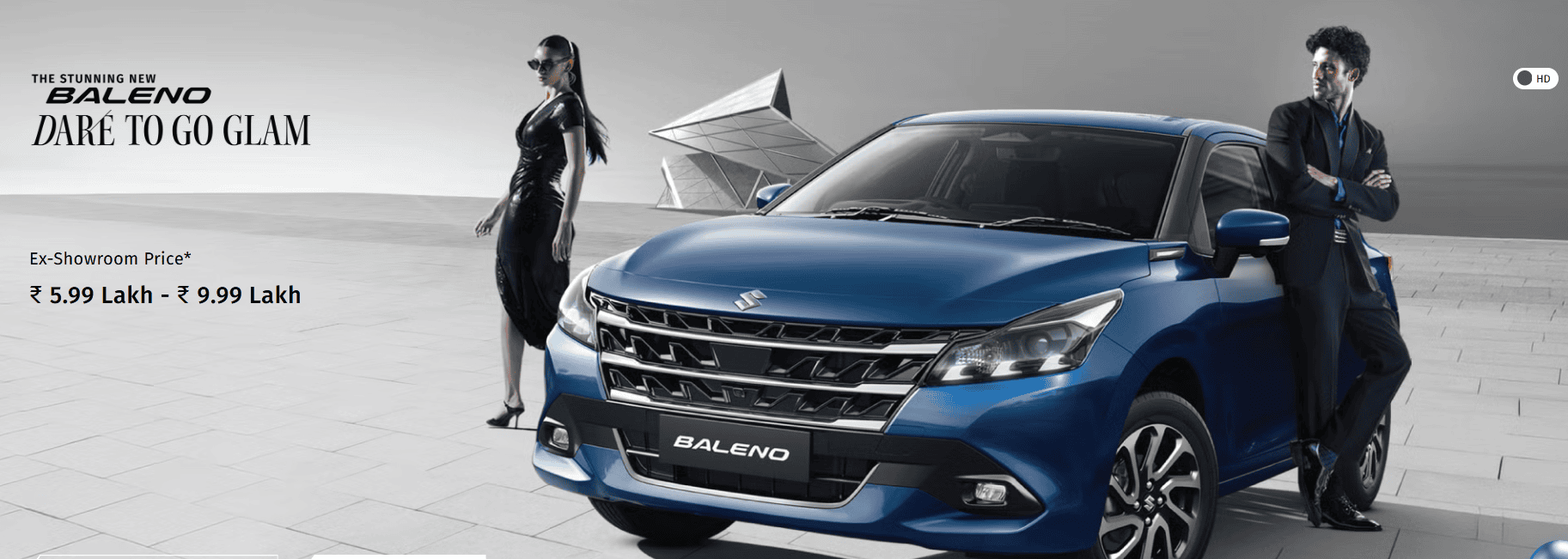
5. Maruti Suzuki Baleno — Best Premium Hatchback Automatic
The Maruti Suzuki Baleno is a strong choice for buyers who want a more premium hatchback experience without moving to an SUV.
Its biggest strengths include cabin space, compact dimensions, fuel efficiency and a broad ownership ecosystem.
The automatic version uses an AMT.
Why choose the Baleno automatic?
The Baleno offers more cabin space than many small hatchbacks while remaining easy to manoeuvre in cities.
The rear seat is also one of the reasons families consider it.
For someone who wants an automatic primarily for commuting but still expects reasonable passenger space, the Baleno is worth considering.
Who should buy it?
It works well for:
- Small families
- Urban commuters
- Buyers wanting a premium hatchback
- Mileage-focused users
- First-time car buyers
- Buyers who value easy ownership
Limitations
The AMT is not the smoothest automatic technology available.
If your priority is a premium automatic driving experience, a CVT-equipped car may be more appropriate.
Verdict: A practical and spacious premium hatchback automatic for everyday family use.
6. Hyundai Grand i10 Nios — Best Compact Automatic for City Driving
If you want a car that is genuinely easy to drive in congested urban environments, the Hyundai Grand i10 Nios deserves consideration.
Its small dimensions make it particularly convenient for crowded streets and tight parking spaces.
The automatic version uses an AMT paired with the petrol engine.
Why choose it?
The biggest advantage is manoeuvrability.
A smaller car is easier to position in traffic and generally less stressful to park.
The Grand i10 Nios also has a cabin that feels relatively premium for its segment.
Best suited for
- Urban commuters
- New drivers
- Small families
- Buyers with limited parking
- People who frequently drive through narrow roads
Limitations
Highway performance is adequate rather than exciting.
If you regularly drive long distances at high speeds, a larger or more powerful vehicle may be more appropriate.
Verdict: An excellent choice for buyers whose driving is dominated by city traffic.
7. Honda Amaze — Best Smooth Automatic Sedan
For buyers who prioritise automatic smoothness, the Honda Amaze is one of the most interesting choices around this price point.
Unlike AMT-equipped alternatives, the CVT provides a more seamless driving experience.
That makes it particularly attractive for people who spend long periods in bumper-to-bumper traffic.
Why choose the Amaze CVT?
A CVT can keep the engine operating smoothly without conventional stepped gear changes.
For relaxed city driving, this can feel considerably more refined than an AMT.
The Amaze also retains the practicality of a sedan, including a separate boot and comfortable cabin.
Who should consider it?
The Amaze is particularly suitable for:
- City commuters
- Family buyers
- Buyers who prioritise refinement
- Sedan lovers
- People who dislike noticeable gear shifts
- Drivers who want a relaxed automatic
Limitations
A CVT is not necessarily the ideal transmission for enthusiastic driving.
Under hard acceleration, the engine can produce the familiar high-revving CVT character that some drivers may dislike.
Verdict: A strong option for buyers who value smoothness and relaxed city driving over sporty performance.
8. Hyundai i20 — Best Premium Automatic Hatchback
The Hyundai i20 is aimed at buyers who want a premium hatchback with a more sophisticated driving experience.
Its automatic version uses a CVT-type transmission, which makes it particularly appealing to city users.
Why choose the i20 automatic?
The i20 provides a combination of cabin quality, comfort and refinement.
It is particularly attractive to buyers who don’t need an SUV but want a premium interior and smooth automatic driving.
The CVT is well suited to relaxed urban commuting.
Best for
- Premium hatchback buyers
- City commuters
- Young professionals
- Small families
- Drivers who prioritise refinement
Limitations
The i20’s higher variants can move beyond a strict ₹10 lakh budget.
Therefore, buyers should focus on the exact automatic variant available within their budget rather than considering the entire model range.
Verdict: One of the better choices for buyers wanting a premium hatchback with a smooth automatic.
9. Nissan Magnite — Best Budget Automatic SUV
The Nissan Magnite is another compelling option for buyers who want an SUV body style without spending too much.
Its CVT option is particularly interesting because it offers a smoother automatic experience than an AMT.
The turbo-petrol configuration also provides stronger performance than a typical naturally aspirated city car.
Why choose the Magnite?
The Magnite offers good value for buyers who want SUV proportions and an automatic transmission.
Its relatively compact dimensions keep it manageable in urban areas, while the turbo-petrol engine gives the car more flexibility for highway use.
Who should consider it?
- Budget SUV buyers
- City commuters
- Buyers wanting a CVT
- Drivers who want turbo-petrol performance
- Small families
Important consideration
Before buying, check service availability in your area.
The size and accessibility of the service network can matter considerably over several years of ownership.
Verdict: An attractive alternative for buyers wanting a compact SUV and smoother automatic transmission.
10. Tata Altroz — Best Automatic for Performance-Oriented Hatchback Buyers
The Tata Altroz is an interesting choice because it brings a more performance-oriented automatic configuration into this price category.
Depending on the variant and current pricing, the Altroz can be available with a dual-clutch automatic option.
Why choose the Altroz?
The DCT configuration can provide quicker and more direct gear changes than an AMT.
That makes it appealing to drivers who want something more engaging than a basic city automatic.
The Altroz also offers a relatively spacious cabin for a premium hatchback.
Who should consider it?
- Enthusiastic drivers
- Premium hatchback buyers
- Buyers wanting quicker automatic shifts
- Urban users
- Buyers who value design and cabin space
Limitations
A DCT is mechanically more complex than a basic AMT.
Buyers should therefore understand the transmission technology, follow the recommended maintenance schedule and consider the long-term ownership implications.
Verdict: An interesting choice for drivers who want more performance from an automatic hatchback.
Which Automatic Transmission Is Best for Indian City Driving?
There is no single answer because different drivers value different things.
AMT
AMT is generally the most affordable way to get two-pedal driving.
It is useful for buyers who want:
- Lower purchase cost
- Good efficiency
- Easy city driving
- Relatively simple transmission technology
The compromise is shift smoothness.
CVT
CVTs are particularly good for relaxed city driving.
They provide smooth acceleration and avoid conventional gear-change interruptions.
They are ideal for:
- Heavy traffic
- Relaxed driving
- Urban commuting
- Drivers prioritising refinement
Torque Converter
Torque-converter automatics can offer a smooth and familiar automatic experience.
They are particularly attractive to buyers who want a balance between city comfort and highway usability.
DCT
Dual-clutch transmissions are designed to provide quick gear changes.
They can be excellent for performance-oriented drivers but may involve greater mechanical complexity than an AMT.
The specific design and maintenance requirements of the gearbox should always be considered.
AMT vs CVT: Which Should You Buy?
If your first priority is affordability and mileage, AMT generally makes more sense.
If your priority is smoothness in traffic, CVT is usually the better choice.
For example, someone driving 20–30 kilometres through heavy traffic every day may appreciate the smoother behaviour of a CVT.
A buyer who wants to spend as little as possible while still avoiding a clutch pedal may prefer an AMT.
The best gearbox is therefore determined by your usage rather than by technology alone.
Are Automatic Cars More Expensive to Maintain?
Not necessarily.
Routine maintenance depends on the specific vehicle and transmission.
However, automatic cars can have additional mechanical or electronic components compared with a manual gearbox, and repair costs can vary significantly between AMT, CVT, torque-converter and DCT systems.
This is why buyers should look beyond the purchase price.
Before buying an automatic, ask the manufacturer or authorised service centre about:
- Scheduled transmission maintenance
- Recommended fluids
- Warranty coverage
- Transmission-related service requirements
- Expected replacement costs for major components
Don’t assume that every automatic gearbox has the same maintenance requirements.
Are Automatic Cars Good for First-Time Buyers?
Yes.
In fact, an automatic can be particularly useful for a first-time buyer who primarily drives in cities.
The absence of a clutch pedal simplifies driving and allows the driver to focus more on steering, traffic and road positioning.
However, new drivers should still learn proper automatic-driving habits.
For example, avoid shifting between reverse and drive before the car has completely stopped.
Use the brake properly while manoeuvring.
And remember that an automatic transmission does not make the vehicle safer by itself. Good driving habits remain essential.
What Should You Check Before Buying an Automatic Car?
Take a Long Test Drive
Don’t judge an automatic car after driving it around the dealership for five minutes.
Drive through:
- Stop-and-go traffic
- Open roads
- Speed breakers
- Parking areas
- Inclines
- Tight turns
This will reveal much more about the transmission.
Check Low-Speed Behaviour
Low-speed driving is particularly important in India.
Pay attention to:
- Jerks
- Delayed acceleration
- Creep behaviour
- Gear changes
- Brake response
- Parking smoothness
Compare the Exact Variant
A model may be advertised below ₹10 lakh while the automatic variant you actually want costs considerably more.
Always compare the exact automatic variant.
Calculate the On-Road Price
Your budget should not be based entirely on ex-showroom pricing.
Insurance, registration and other charges can push the final amount substantially higher.
Check Fuel Economy for Your Usage
A car with excellent claimed mileage isn’t automatically the cheapest car to run.
Your actual fuel consumption will depend on traffic, driving style, road conditions, air-conditioning use and vehicle load.
Evaluate Rear-Seat Comfort
If the car is for family use, don’t spend the entire test drive in the driver’s seat.
Sit in the back.
Check whether adults can sit comfortably for an extended journey.
Which Is the Best Automatic Car Under ₹10 Lakh for Mileage?
For buyers who prioritise fuel economy, the Maruti Suzuki Swift is one of the strongest choices in this segment.
The Maruti Suzuki Dzire is also an attractive option for buyers who want sedan practicality.
CNG variants can make sense for high-mileage users, but the availability of an automatic CNG combination varies by model, so buyers should check the exact configuration.
Which Is the Best Automatic Car Under ₹10 Lakh for Families?
The answer depends on body style.
For an SUV-style vehicle, the Tata Punch and Hyundai Exter are worth considering.
For a sedan, the Maruti Suzuki Dzire and Honda Amaze offer different approaches.
For a premium hatchback, the Maruti Suzuki Baleno provides useful cabin space and practicality.
Which Is the Best Automatic Car for Heavy Traffic?
If smoothness is your primary concern, a CVT-equipped car such as the Honda Amaze or Hyundai i20 can be more satisfying than an AMT.
However, AMTs remain attractive because of their affordability and efficiency.
The best choice depends on whether you value smoothness or purchase price more strongly.
Frequently Asked Questions
Which is the best automatic car under ₹10 lakh in India in 2026?
The Maruti Suzuki Swift is one of the strongest all-round choices for buyers prioritising mileage and city use. The Tata Punch, Maruti Suzuki Dzire, Hyundai Exter, Baleno and other options become more attractive depending on whether you prioritise SUV styling, family space, refinement or premium features.
Which automatic car has the best mileage?
The Maruti Suzuki Swift is among the strongest petrol automatic options for claimed fuel efficiency. Actual mileage will vary depending on traffic, driving style, road conditions and air-conditioning use.
Is AMT better than CVT?
Neither is universally better. AMT is generally more affordable and efficient, while CVT usually provides smoother acceleration and better low-speed refinement.
Is an automatic car good for city driving?
Yes. Automatic cars are particularly useful in heavy traffic because the driver does not have to repeatedly operate a clutch pedal and manually change gears.
Are automatic cars expensive to maintain?
Maintenance costs depend on the specific car and gearbox. AMTs, CVTs, torque converters and DCTs have different designs and service requirements, so buyers should check the manufacturer’s maintenance schedule and warranty coverage.
Which is better for a first-time buyer, manual or automatic?
For predominantly urban driving, an automatic can be easier to learn and less tiring. A manual can still be preferable for buyers who want greater control over gear selection or who frequently drive in areas where manual driving is more convenient.
Should I buy an AMT car for highway driving?
You can. An AMT can work perfectly well on highways, but the driving experience depends on the specific transmission calibration and engine. Buyers who regularly drive at higher speeds may prefer a torque converter, CVT or DCT depending on their priorities.
Is a CVT good for long-term ownership?
A well-maintained CVT can provide a comfortable ownership experience, but maintenance requirements vary by manufacturer and transmission design. Following the recommended service schedule is important.
Final Verdict
The best automatic car under ₹10 lakh in India in 2026 depends on what you expect from your vehicle.
If mileage and affordable city driving are your biggest priorities, the Maruti Suzuki Swift is a very strong choice.
If you want an SUV-style vehicle, the Tata Punch and Hyundai Exter deserve serious consideration.
For family practicality and efficiency, the Maruti Suzuki Dzire remains an excellent option.
If you want a premium hatchback, the Maruti Suzuki Baleno and Hyundai i20 offer different approaches, with the i20 particularly appealing if smooth automatic driving is important.
For buyers who value automatic refinement, the Honda Amaze CVT is one of the most interesting choices.
If you want an automatic SUV with turbo-petrol performance, the Nissan Magnite can be worth considering.
And for buyers who want something more performance-oriented, the Tata Altroz DCT offers a different experience from conventional AMT-equipped cars.
Ultimately, don’t choose an automatic car simply because it has an automatic gearbox. The transmission type, engine, variant, running cost, service requirements and your daily driving conditions all matter.
For most Indian city commuters, the ideal automatic is the one that makes traffic easier without creating unnecessary ownership costs. Take a proper test drive, compare the exact variants, calculate the on-road price and choose the gearbox that matches your driving style rather than simply choosing the car with the longest feature list.