
Rajasthan has seen a sharp rise in the number of young people entering the workforce, but a new study suggests that the state is struggling to convert this increase into better-paying and more secure employment.
Nearly 47 per cent of working young people between the ages of 15 and 29 in Rajasthan are now employed in agriculture, where the median monthly earnings are only ₹7,110, according to the Rajasthan Handbook of Youth Opportunity.
The report was launched jointly by the Future of India Foundation and Seva Mandir in Jaipur. It examines employment, education, skills, participation and other indicators affecting the state’s young population.
The findings highlight a major contradiction in Rajasthan’s employment landscape. While the proportion of young people participating in the labour force has increased substantially, much of the additional employment has come from agriculture and self-employment rather than regular salaried jobs.
According to the study, the share of Rajasthan’s 15-29 age group that is either working or looking for work increased from 38 per cent in 2017-18 to 51.1 per cent in 2025.
However, the rise in employment opportunities has not translated into a comparable increase in stable or well-paid jobs.
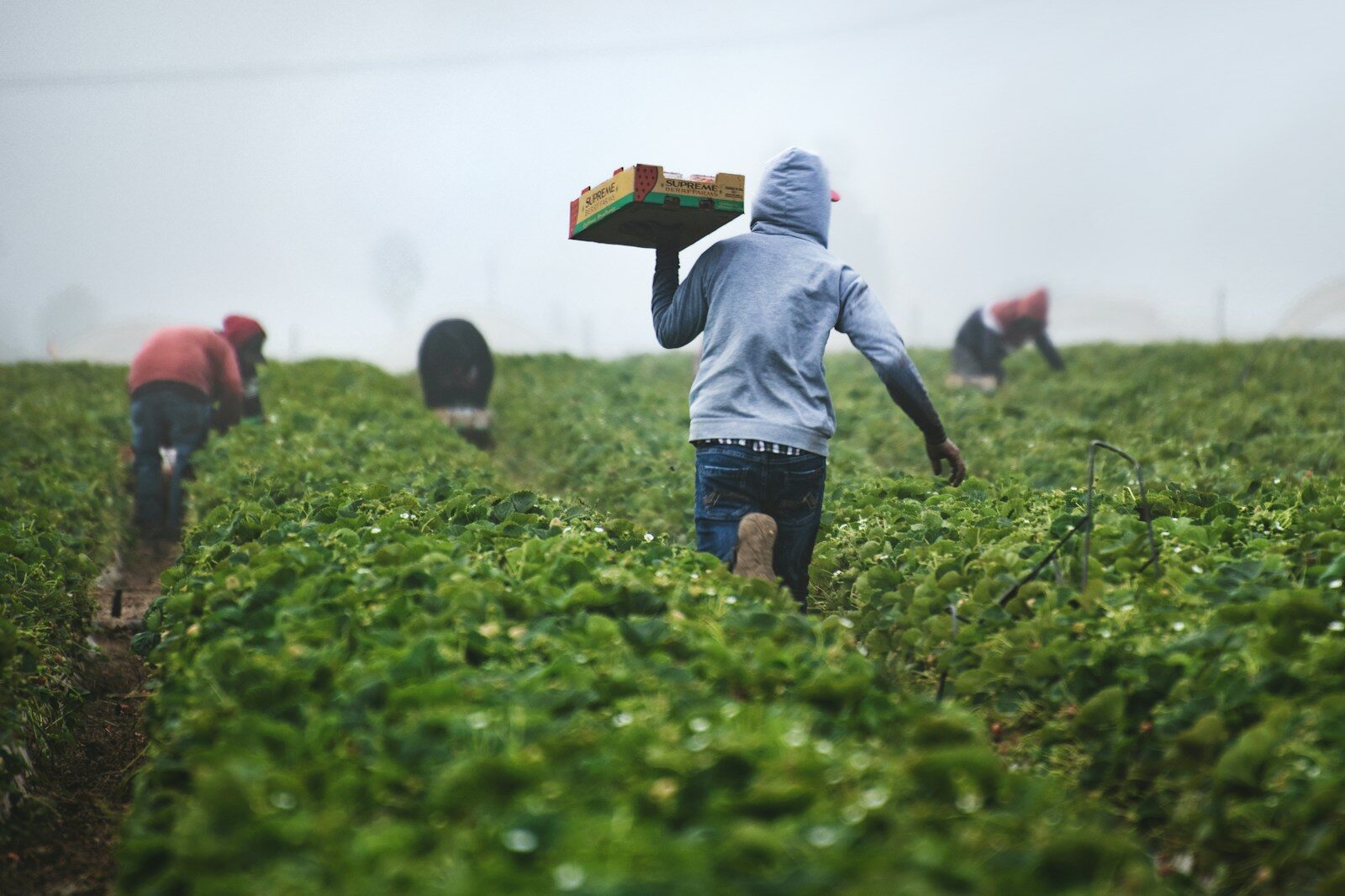
Agriculture accounts for the largest share of youth employment. For every 100 young workers in Rajasthan, around 47 are engaged in agriculture, with median monthly earnings of ₹7,110.
The study shows a significant gap between agricultural earnings and income in other sectors. Around 14 per cent of young workers are employed in construction, where median monthly earnings are about ₹12,720.
Manufacturing accounts for approximately 12 per cent of youth employment, with median monthly earnings of ₹10,670. Another 12 per cent work in trade and hospitality, where the median monthly income is around ₹12,390.
Services employ about 11 per cent of young workers, with median earnings of approximately ₹14,270. Transport and logistics account for about 3 per cent, but workers in this category have median monthly earnings of around ₹15,330.
The figures underline the economic challenge facing young people who remain dependent on agriculture. Despite agriculture absorbing a large proportion of the state’s young workforce, it offers substantially lower median earnings than several other sectors.
The report also highlights the growing importance of self-employment. Around 61 per cent of working young people in Rajasthan are classified as self-employed.
For many families, self-employment and agricultural work may provide an accessible source of livelihood when formal employment opportunities are limited. But the study suggests that such work does not always provide stable income, social protection or opportunities for economic mobility.
Another major concern is unpaid family labour.
The report estimates that 39 per cent of young workers in Rajasthan are engaged in unpaid family work. This includes young people working on family farms or in family enterprises without receiving a separate wage of their own.
The situation is particularly pronounced among young women. According to the study, around 61 per cent of working young women are engaged in unpaid family labour.
This means that a significant portion of young people may technically be classified as employed while receiving no independent income from their work.
The findings are particularly important for understanding women’s participation in Rajasthan’s economy. A young woman working on a family farm or helping in a family business may contribute substantially to household production without being counted as a conventional wage earner.
The report also points to the limited availability of regular salaried employment.
Only around 23 per cent of young workers in Rajasthan have regular salaried jobs, compared with approximately 29 per cent in a typical Indian state.
The lack of social security is another major concern. About 84 per cent of young workers in Rajasthan do not have employer-provided social security such as provident fund, gratuity or health coverage.
This leaves a large section of the state’s young workforce financially vulnerable, particularly when faced with illness, job loss or other unexpected expenses.
Rajasthan’s business structure is one reason behind the limited availability of formal employment. The study notes that the state has more than three million registered enterprises, but around 99 per cent are micro-enterprises.
Nearly nine out of every 10 businesses have no more than two workers.
Such a business landscape can provide opportunities for self-employment, but it makes it difficult to generate large numbers of stable salaried positions.
The report also points out that factory employment increased by more than one-third between 2017-18 and 2023-24. Despite that growth, manufacturing accounts for only around 2 per cent of total employment in the state.
This highlights the scale of the challenge facing Rajasthan. Industrial growth has the potential to create better-paying jobs, but the current industrial base is still too small to absorb the state’s rapidly expanding young workforce.
Youth unemployment remains another issue. The handbook puts Rajasthan’s youth unemployment rate at 12.3 per cent, while 20.9 per cent of young people are classified as not being in employment, education or training.
With approximately 2.27 crore young people in the state, even relatively small percentage changes translate into large numbers of individuals.
The study argues that Rajasthan needs a broader employment strategy rather than relying primarily on government recruitment or traditional employment schemes.
The recommendations include improving earnings and working conditions in existing occupations, helping small businesses expand and hire more workers, increasing apprenticeships and aligning skill-development programmes more closely with local demand.
The report also calls for greater employment opportunities for young women, particularly paid work and apprenticeships that can provide them with independent income and experience.
District-level differences are another important feature of the study.
The handbook provides detailed scorecards for all 41 districts, showing that opportunities for young people vary considerably across Rajasthan.
Jaipur, Jhunjhunu and Udaipur rank among the stronger-performing districts, while Baran, Pratapgarh and Dungarpur are at the lower end of the ranking.
Rajasthan’s overall YouthPOWER score is 45.7, while district scores range from 55.9 in Jaipur to 41.6 in Dungarpur.
The district-level approach is intended to help policymakers identify problems that may require different solutions in different parts of the state.
A young person in Jaipur, for example, may have access to significantly different employment, education and training opportunities compared with someone living in a remote tribal district.
The handbook therefore recommends using district-level data to design more targeted interventions instead of applying the same employment strategy across the entire state.
The findings come as the Rajasthan government is also attempting to address the state’s employment challenge through its Rajasthan Employment Policy 2026.
The policy aims to create 15 lakh employment opportunities by March 2029 through a combination of self-employment, wage employment and entrepreneurship. It also proposes an AI-enabled employment platform, district-level employment plans and an Employment Outcome Index to track placements and wage growth.
The contrast between the policy ambition and the new youth employment data shows the scale of the task ahead.
Creating jobs is only one part of the problem. Rajasthan also needs to create jobs that offer adequate wages, predictable employment and social security.
The ₹7,110 median monthly income reported for young agricultural workers illustrates this challenge particularly clearly.
For young people entering the workforce, employment that provides little income or no independent wage may not significantly improve their long-term economic prospects.
The study therefore calls for a state employment policy that tracks not just the number of jobs created but also regular employment, wage growth and social-security coverage.
It also recommends transforming existing employment exchanges into District Youth Resource Centres.
These proposed centres could provide young people with a single point of access to career guidance, jobs, training, apprenticeships and enterprise support.
Such an approach could be particularly useful in districts where young people have limited information about employment opportunities outside traditional occupations.
The report also argues that elected representatives should make youth outcomes a regular part of district-level discussions. Rajasthan’s MPs and MLAs could use district scorecards to identify employment and education gaps and track progress over time.
The wider concern is that Rajasthan’s demographic advantage could become difficult to realise if a growing young population remains concentrated in low-paying or unpaid work.
A larger workforce can support economic growth when people have access to productive employment, skills and rising incomes. But simply increasing labour-force participation does not automatically guarantee better living standards.
Rajasthan’s latest youth data therefore presents a mixed picture.
More young people are participating in the labour market than eight years ago, but nearly half of young workers remain in agriculture, where median monthly earnings are only ₹7,110. At the same time, regular salaried employment remains limited and most young workers lack social-security protection.
The challenge for Rajasthan will now be to ensure that the next phase of employment growth is not measured only by the number of people entering work.
The quality of those jobs, the wages they provide, the skills workers acquire and the security available to them will determine whether the state’s large young population becomes a genuine economic advantage.
With millions of young people entering or already participating in the workforce, the pressure to create better opportunities is likely to remain one of Rajasthan’s most important economic and policy challenges in the years ahead.