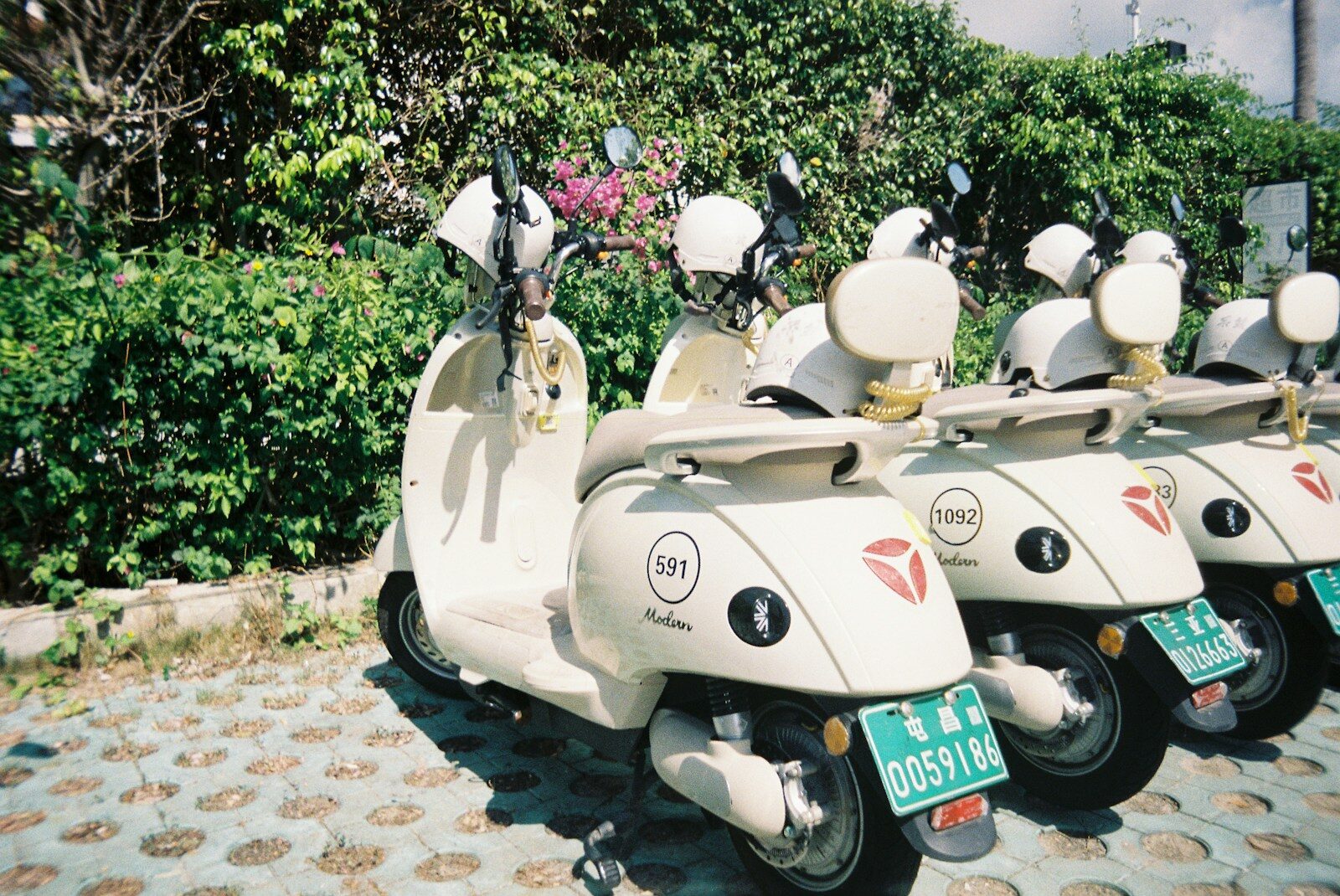
India’s electric two-wheeler market is entering a new phase in 2026. Electric scooters are no longer limited to technology enthusiasts or early adopters in major cities. More mainstream buyers are now considering them for everyday commuting, family use and even longer-distance travel.
The biggest sign of this transformation is visible in the sales numbers. India retailed around 1.83 lakh electric two-wheelers in August 2026, up roughly 67% from the same month last year. Although August sales declined from July’s record level, the year-on-year growth shows that demand remains exceptionally strong.
More importantly, the market is increasingly being controlled by established manufacturers. TVS Motor, Bajaj Auto, Ather Energy and Hero Vida together accounted for roughly three-quarters of India’s electric two-wheeler sales in August.
This marks a major change from the early years of India’s electric scooter boom, when EV-first companies dominated consumer attention.
India’s Electric Two-Wheeler Market Is Growing Rapidly
The scale of India’s electric two-wheeler expansion is becoming difficult to ignore.
According to FADA retail data, 1,83,204 electric two-wheelers were sold in August 2026, compared with 1,09,673 units in August 2025. That represents year-on-year growth of about 67%.
August was nevertheless weaker than July. Electric two-wheeler retail sales fell around 10.35% from July’s 2,04,362 units.
The monthly decline does not necessarily indicate weakening demand. July was an exceptionally strong month and became the first month in which India’s electric two-wheeler market crossed two lakh retail sales.
More importantly, electric two-wheelers accounted for 10.68% of India’s overall two-wheeler retail market in August, up from 7.66% a year earlier. August was the first non-festive month in which electric two-wheelers crossed the 10% share mark.
That is an important milestone because it shows that EV adoption is becoming part of normal two-wheeler purchasing behaviour rather than being driven only by seasonal promotions or unusually strong months.
TVS and Bajaj Are Now Dominating the EV Race
One of the biggest changes in India’s electric two-wheeler market is the rise of traditional motorcycle manufacturers.
TVS Motor finished August at the top with 48,938 electric two-wheelers, giving it around 26.7% of the market. Its sales were nearly double the 25,646 units registered in August 2025, representing growth of more than 90%.
Bajaj Auto followed with 41,114 electric two-wheelers and a market share of approximately 22.4%. Its year-on-year growth was even more dramatic, at more than 235%, compared with 12,246 units in August 2025.
Together, TVS and Bajaj accounted for almost half of India’s electric two-wheeler retail sales in August.
This is significant because both companies already have decades of experience selling conventional two-wheelers across India.
Their biggest advantage is not simply the product.
It is the combination of brand recognition, dealerships, financing relationships, spare-parts availability and service infrastructure that they can bring to the electric market.
A customer buying an electric scooter is increasingly asking the same questions they would ask before buying a petrol scooter: Where is the nearest service centre? How easy is it to get spare parts? What happens if the battery develops a problem? Will the company still support the vehicle several years from now?
Established manufacturers can answer many of those questions more easily than a new company with a small physical footprint.
TVS iQube Has Become a Major Mass-Market EV
TVS’s success demonstrates how quickly electric scooters can move into the mainstream when a major established manufacturer commits to them.
The iQube has become the company’s primary electric scooter volume driver, helping TVS establish itself as India’s leading electric two-wheeler manufacturer.
TVS sold 3,56,579 electric two-wheelers between January and August 2026, up 77% year on year. The company already surpassed its entire 2025 electric two-wheeler sales figure before the end of August.
Its market share during the first eight months stood at around 26%.
The numbers demonstrate that TVS is no longer treating electric scooters as a niche experiment.
The company has the manufacturing scale and distribution network required to serve a mass-market audience, and that could become increasingly important as electric scooters move beyond early adopters.
Bajaj Chetak Is Making Electric Scooters Mainstream
Bajaj has followed a similar path with the Chetak.
The iconic Chetak name has helped the company connect its electric product with consumers who already know the brand. Rather than creating an entirely new identity for its EV business, Bajaj has used an established name and expanded the Chetak range across different price points.
Bajaj sold 3,05,226 electric two-wheelers between January and August 2026, recording 69% year-on-year growth and capturing roughly 22% of India’s electric two-wheeler market.
The company also became the second manufacturer after TVS to cross three lakh electric scooter sales in a calendar year.
The rapid growth of Chetak shows that Indian consumers are becoming more comfortable buying electric vehicles from traditional motorcycle manufacturers.
Ather Is Building a Strong Middle Ground
Ather Energy remains one of the most important players in India’s electric two-wheeler industry.
The company occupies third position behind TVS and Bajaj, with 28,757 electric two-wheelers sold in August 2026, up nearly 50% from August 2025.
Ather’s position is particularly interesting because it combines the advantages of an EV-focused company with a growing mainstream product portfolio.
The Rizta has become an important volume product, appealing to families and customers looking for a more practical electric scooter rather than a performance-oriented model.
The company’s 450 range continues to target customers who want a sportier experience.
Ather has also expanded its addressable market with the Konarc, which starts at ₹99,999. The new model could help the company compete more directly for buyers entering the mass-market electric scooter segment.
Ather sold 2,29,099 electric two-wheelers during the first eight months of 2026, up 83% year on year. Its market share during the period was around 17%.
Hero Vida Is Finally Finding Its Mass-Market Strategy
Hero MotoCorp’s Vida electric division has also become an increasingly important part of the market.
Vida sold 19,007 electric two-wheelers in August, up around 38% from August 2025.
Its longer-term growth has been even more impressive.
Vida sold 1,48,069 electric two-wheelers between January and August, representing a 151% year-on-year increase. Its market share rose to around 11%, compared with approximately 7% a year earlier.
The affordable VX2 range has played a particularly important role.
Hero’s decision to move into the lower-priced electric scooter market has helped it reach customers who may not be willing to spend premium prices on an EV.
The company has also used its Battery-as-a-Service model to reduce the initial purchase cost of some products, potentially making electric scooters more accessible to price-sensitive buyers.
Why Affordable EVs Could Drive the Next Phase
The first phase of India’s electric scooter market was heavily influenced by technology.
Early buyers were often attracted by connected features, impressive acceleration, large displays and futuristic designs.
The mass market is different.
A typical commuter wants an affordable vehicle with predictable running costs, good range, easy charging and reliable after-sales support.
That is why sub-₹1 lakh and around-₹1 lakh electric scooters could become particularly important.
When the upfront price begins approaching conventional petrol scooters, the economic argument for switching to electric becomes much easier for mainstream consumers.
The purchase decision then becomes less about adopting new technology and more about choosing the cheaper or more convenient vehicle for everyday transportation.
Running Costs Are a Major Reason for the Shift
Electric scooters have another major advantage: operating cost.
Electricity is generally cheaper per kilometre than petrol, although the actual savings depend on electricity tariffs, charging habits, vehicle efficiency and petrol prices.
Electric scooters also have fewer moving components in their powertrains than conventional petrol scooters.
That can potentially reduce certain maintenance requirements over the long term.
For a commuter covering dozens of kilometres every day, the difference in energy cost can become significant over several years.
This is one reason electric scooters are increasingly being considered by high-mileage users rather than only environmentally conscious buyers.
E20 Petrol Is Also Influencing Consumer Decisions
Another factor entering India’s two-wheeler discussion is the transition toward E20 petrol.
India has been increasing ethanol blending in petrol as part of its strategy to reduce crude-oil imports and emissions.
However, concerns about compatibility and fuel economy for older petrol vehicles have contributed to some consumer uncertainty.
Recent reporting indicates that concerns around E20 compatibility are helping support demand for electric two-wheelers. Reuters reported that India’s electric two-wheeler adoption is accelerating partly because owners of older petrol vehicles are concerned about their compatibility with E20 fuel.
That does not mean E20 is the only reason people are buying EVs.
Price, running cost, government policies, product availability and improving charging infrastructure all matter.
But fuel-related uncertainty could encourage some consumers to consider an electric scooter when they are already planning their next vehicle purchase.
Ola Electric’s Decline Shows How Much the Market Has Changed
The changing market is perhaps most clearly visible in Ola Electric’s performance.
Ola was once one of the most dominant names in India’s electric two-wheeler industry.
But in August 2026, the company registered 13,852 units, down 28.83% from 19,464 units in August 2025. It was the only manufacturer among the leading brands to record a year-on-year decline during the month.
The contrast with TVS and Bajaj is striking.
The market has moved from an environment where EV-focused startups could dominate through aggressive launches and technology positioning to one where manufacturing scale, dealer networks and service support are becoming equally important.
Ola’s experience does not mean EV startups cannot succeed.
It demonstrates that the market is becoming more competitive.
Customers now have considerably more choices, and established manufacturers have entered the same price segments with increasingly capable products.
The Market Is Becoming More Competitive
The electric two-wheeler industry is no longer a simple contest between a few EV startups.
TVS and Bajaj have scale.
Ather has a strong technology-focused identity and an expanding product range.
Hero has enormous distribution reach and is increasingly targeting affordable EVs.
Ola remains a significant player despite its recent challenges.
Smaller manufacturers such as River and BGauss are also growing quickly. River recorded 5,141 registrations in August, up more than 170% year on year, while BGauss recorded 4,845 units, up more than 180%.
This means consumers will increasingly have to compare products based on more than just price.
Service Network Could Become a Major EV Buying Factor
As electric scooters enter the mass market, after-sales support could become one of the most important competitive advantages.
An EV buyer may care about battery warranty, software support, replacement parts, charging equipment and service turnaround times just as much as range.
A manufacturer with hundreds of dealerships can potentially provide more convenient support than a company with a smaller physical network.
This gives traditional manufacturers a significant advantage.
TVS, Bajaj and Hero already have extensive networks across India, while Ather has also spent years expanding its own retail and service infrastructure.
The next phase of competition could therefore be less about who has the most impressive specification sheet and more about who delivers the strongest ownership experience.
India’s Electric Two-Wheeler Market Could Cross 20 Lakh Sales
The market’s current trajectory points toward another major milestone.
India sold approximately 13.6 lakh electric two-wheelers during the first eight months of 2026, already surpassing the 13.4 lakh units sold during the entire year of 2025.
With four months remaining and the festive season approaching, the industry is on course to potentially cross 20 lakh electric two-wheeler sales in a calendar year for the first time.
The festive period could be particularly important because two-wheeler purchases traditionally increase during this period.
Manufacturers are likely to introduce discounts, financing schemes and new models to attract buyers.
If electric scooters maintain their current momentum, September through November could significantly increase the industry’s annual numbers.
What This Means for Indian Two-Wheeler Buyers
The growing electric two-wheeler market gives Indian consumers more choice than ever.
Someone looking for a family scooter can consider models such as the Ather Rizta or TVS iQube.
A buyer interested in the established Chetak name can choose from Bajaj’s electric range.
A price-conscious customer can consider Vida’s more affordable products.
Performance-focused buyers have options from Ather and other manufacturers.
The decision, however, should not be based purely on the headline range.
Potential buyers should consider their daily distance, home charging availability, battery warranty, local service support, replacement costs and actual on-road price.
An electric scooter can make excellent financial sense for someone who travels 30–50km every day and has convenient charging access. For someone who regularly travels hundreds of kilometres without reliable charging infrastructure, a petrol scooter may still be more convenient.
The Big Shift Is From Early Adoption to Mass Adoption
The most important change taking place in India’s electric two-wheeler industry is not simply the increase in sales.
It is the change in who is buying the vehicles.
Electric scooters are increasingly being positioned as mainstream transportation rather than futuristic technology.
TVS and Bajaj together accounting for nearly half of August’s electric two-wheeler sales is strong evidence of this shift.
At the same time, TVS, Bajaj, Ather and Vida together accounted for roughly 76% of electric two-wheeler sales during the first eight months of 2026, showing how quickly the market has consolidated around a small group of strong manufacturers.
The early EV era was about convincing people to try electric.
The next era is about convincing millions of ordinary commuters that electric is the better choice.
That requires affordable products, dependable batteries, widespread service networks, convenient charging and competitive financing.
Indian manufacturers are increasingly building exactly that ecosystem.
What Could Happen Next
The electric two-wheeler market is likely to become even more competitive over the next few years.
More affordable models are expected to enter the market, while established manufacturers will continue expanding their EV portfolios.
Premium manufacturers will compete on performance and technology, while mass-market brands will focus increasingly on price, range and ownership costs.
The expansion of charging infrastructure will also influence adoption.
At the same time, battery technology is expected to continue improving, potentially allowing manufacturers to offer greater range without making scooters significantly heavier or more expensive.
Recent investments from companies entering the mass market underline the confidence surrounding the sector. Ultraviolette, for example, announced plans for a new Hosur facility with an initial annual capacity of 2.5 lakh vehicles, expandable to 5 lakh, as it prepares to expand into the mass-market segment.
Conclusion
India’s electric two-wheeler market has moved far beyond its experimental phase.
The August 2026 numbers show a market growing at a remarkable pace, with electric two-wheelers accounting for more than 10% of total two-wheeler retail sales in a non-festive month.
TVS and Bajaj have emerged as the strongest volume players, Ather continues to expand its mainstream presence, and Hero Vida is rapidly gaining ground with affordable products. Meanwhile, Ola’s decline demonstrates how difficult it has become for any single EV-first company to dominate the market.
The biggest change is that India’s electric scooter market is becoming a mass-market battle.
Consumers are no longer choosing between petrol scooters and a handful of experimental electric products. They can now compare established brands, affordable models, family scooters, performance products and increasingly sophisticated connected features.
With more than 13.6 lakh electric two-wheelers already sold in the first eight months of 2026 and the industry potentially heading toward the two-million-unit milestone, the shift is becoming impossible to ignore.
The question for India’s two-wheeler industry is no longer whether electric scooters will become mainstream.
The numbers suggest they already are.
The bigger question is which manufacturer will ultimately become India’s mass-market electric two-wheeler leader.