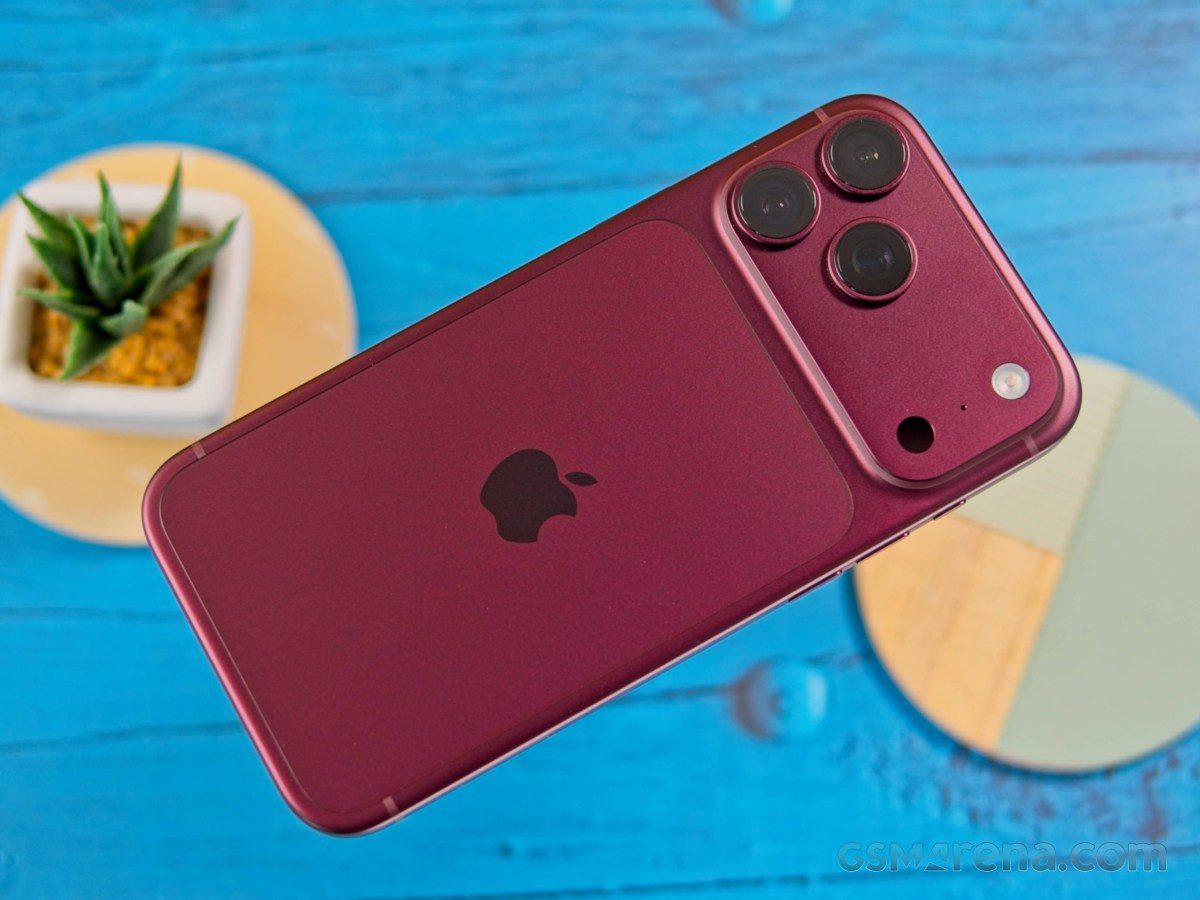

Apple has delivered an unexpected shock to Indian iPhone buyers. Instead of following the usual pattern of making older iPhone models cheaper after a new generation arrives, the company has increased prices across several existing models in India, with some configurations becoming dramatically more expensive.
According to Reuters, Apple has raised prices on its existing iPhone lineup in India by as much as 41%, making the increase one of the steepest among markets where Apple has changed prices this year. The biggest increase affects the 1TB version of the iPhone Air, while the iPhone 17 has also become substantially more expensive.
The price changes came shortly after Apple’s September 2026 event, where the company introduced the iPhone 18 Pro, iPhone 18 Pro Max and its first foldable iPhone, the iPhone Duo. The launch was also the first major iPhone event led by new Apple CEO John Ternus.
For Indian consumers, however, the biggest surprise was not just the new phones. It was what happened to the older models.
The iPhone 17 256GB, which originally launched in India at ₹82,900, now costs ₹99,900. That is an increase of ₹17,000, or roughly 21%. The 512GB model has increased from ₹1,02,900 to ₹1,24,900, meaning buyers now pay ₹22,000 more for the higher-storage version.
The increase is particularly unusual because consumers generally expect last-generation iPhones to receive price reductions once Apple introduces newer models.
This year, the opposite has happened.
The iPhone 17e has also become more expensive. Its 256GB variant has moved from ₹64,900 to ₹79,900, a ₹15,000 increase. The 512GB version has increased from ₹84,900 to ₹1,04,900, adding another ₹20,000 to the price.
The iPhone Air has experienced an even more dramatic change in its highest-storage configuration.
Reuters reports that the 1TB iPhone Air now costs ₹2,24,900 in India, representing a 41% increase. In the United States, the equivalent model increased by about 21%, showing just how sharply the Indian pricing changed compared with Apple’s U.S. market.
The iPhone 16 has also seen a price increase in India, while the company’s newly launched premium models have entered the market at significantly higher prices than their predecessors.
The iPhone 18 Pro starts at ₹1,64,900 in India, compared with ₹1,34,900 for the previous-generation iPhone 17 Pro. That represents an increase of ₹30,000, or about 22%. The iPhone 18 Pro Max starts at ₹1,79,900, compared with ₹1,49,900 for the iPhone 17 Pro Max, a rise of ₹30,000.
Then there is the iPhone Duo.
Apple’s first foldable iPhone starts at ₹2,99,900 in India. Reuters notes that the Indian price is around $1,100 higher than the U.S. price, further highlighting the unusually large gap between Apple’s pricing in the two markets.
The question now is why Apple has increased prices so sharply.
One major factor is the rising cost of memory and storage components.
Apple had previously indicated that global iPhone pricing would be affected by increasing costs for memory and storage chips. The rapid expansion of artificial intelligence has created enormous demand for memory components used in data centres, putting pressure on supply and increasing costs across the electronics industry.
The AI boom is therefore affecting consumers far beyond AI products themselves.
Data centres supporting large AI models require huge quantities of advanced memory and storage hardware. As technology companies compete for those components, manufacturers of consumer electronics can face higher input costs.
Smartphone companies then have to decide whether to absorb those increases, reduce margins or pass some of the additional cost on to customers.
Apple appears to be passing a significant portion of those costs through its latest pricing strategy.
However, component costs are not the only reason iPhones tend to be more expensive in India.
India also has import duties on components and an 18% goods and services tax. Reuters notes that these factors contribute to Indian iPhones being considerably more expensive than equivalent models in the United States, even though India has become an increasingly important manufacturing location for Apple.
That creates an interesting contradiction.
India has become one of Apple’s fastest-growing markets and is also an increasingly important base for iPhone assembly. Yet local manufacturing does not automatically mean Indian consumers receive the same prices as buyers in the United States.
Taxes, import structures, supply-chain costs and Apple’s regional pricing strategy can all influence the final retail price.
Currency differences also matter when comparing Indian and American prices, but the latest changes go beyond simple exchange-rate movements. The scale of the increases has made the Indian market stand out among countries where Apple has adjusted prices this year.
The iPhone 17 is a particularly clear example.
An iPhone that launched at ₹82,900 is now approaching the ₹1 lakh psychological barrier at ₹99,900. The difference is not accompanied by a new processor, camera system or display upgrade because of the price revision. The hardware itself has not suddenly changed to justify the additional ₹17,000.
For buyers who were waiting for the previous generation to become cheaper, this changes the calculation completely.
Someone who delayed an iPhone purchase expecting the arrival of the iPhone 18 Pro to bring down the iPhone 17’s price may instead find that the official Apple price is now considerably higher.
That could push consumers toward third-party retailers, older inventory or promotional offers.
Retailers may still have stock purchased under earlier pricing conditions, potentially creating opportunities for discounts even though Apple’s official pricing has increased. But availability will depend on the seller and remaining inventory.
The new pricing could also change how Indian consumers view Apple’s product lineup.
The iPhone 17e was positioned as a comparatively accessible way to enter Apple’s newer-generation ecosystem. At ₹79,900 for 256GB, however, it is no longer close to the price category many consumers might associate with a lower-cost iPhone.
Likewise, the iPhone 17 now sits just ₹100 below ₹1 lakh for its 256GB configuration.
That could strengthen the perception that Apple’s smartphones are increasingly becoming premium or luxury purchases in India.
Social media reaction to the price increases was immediate. Reuters reported criticism from Indian users who argued that Apple’s pricing was pushing iPhones further into luxury territory. The cost of the iPhone Duo attracted particular attention because of the large difference between its Indian and U.S. prices.
The price increase also arrives at an important time for the Indian smartphone market.
Apple has been expanding its presence in India, with the country becoming increasingly important both as a consumer market and as a manufacturing hub. Higher prices could potentially make affordability a greater challenge, particularly for consumers who were hoping to purchase older models after the latest launch.
At the same time, Apple has maintained strong demand for premium smartphones, and its brand remains highly influential among Indian consumers.
The company may therefore be betting that demand for iPhones remains strong enough to withstand higher prices.
There is another important detail in this year’s strategy: Apple has not simply increased the price of one model.
The increases stretch across multiple generations and configurations, creating a broader upward shift in the official iPhone price structure.
That means consumers cannot necessarily avoid the impact simply by choosing an older phone.
Someone considering an iPhone 17 instead of the iPhone 18 Pro now faces a significantly higher price than they would have expected before Apple’s September event. A buyer considering the 17e also faces a substantial increase.
For customers, this makes timing much more important.
Buying before a major iPhone launch has traditionally carried one risk: the new model could make the previous generation look outdated. But waiting for the new generation has often offered another benefit because older models could become cheaper.
The latest Apple strategy challenges that assumption.
Instead of automatically lowering the price of existing phones, Apple has raised prices while introducing more expensive new products at the top end.
That makes the 2026 iPhone lineup notably different from the familiar upgrade cycle many Indian buyers have become accustomed to.
It is also worth remembering that Apple’s official price is not always the same as the effective street price.
Retailers, banks, exchange offers, seasonal promotions and older inventory can all affect what a customer actually pays. During India’s major shopping and festive periods, discounts may partially offset the higher official prices.
Still, Apple’s revised pricing establishes a much higher reference point.
For the iPhone 17, the new ₹99,900 starting price is particularly significant. It means consumers now have to pay almost ₹1 lakh simply to purchase the standard 256GB model through Apple’s official pricing structure.
And the situation becomes even more expensive for customers who want additional storage.
The 512GB iPhone 17 is now ₹1,24,900, while the 512GB iPhone 17e reaches ₹1,04,900. The premium for storage has therefore become a substantial part of the overall purchase decision.
For Apple, the strategy could help protect margins at a time when component costs are rising.
For consumers, however, it means the traditional advice of “wait for the new iPhone and buy last year’s model cheaper” may no longer work as reliably.
The broader story is bigger than one price increase.
The AI boom is beginning to influence the economics of consumer electronics in ways that ordinary smartphone buyers can directly feel. Memory and storage components are increasingly valuable because the world’s AI infrastructure requires enormous amounts of them.
At the same time, regional taxes, duties and pricing structures continue to create significant differences between markets.
India’s latest iPhone price increase sits at the intersection of all these forces.
Apple has not publicly attributed every individual Indian price change to one specific factor, so it would be premature to say that memory costs alone caused the entire increase. Reuters’ reporting points to rising memory and storage costs as a major global pressure, while India’s taxes and import duties also contribute to the higher local prices.
What is clear is that Indian iPhone buyers are entering a more expensive phase.
The iPhone 17 is now almost a ₹1 lakh phone at its entry point. The iPhone 18 Pro begins at ₹1,64,900. The iPhone 18 Pro Max starts at ₹1,79,900. And Apple’s first foldable, the iPhone Duo, begins at ₹2,99,900 in India.
The result is one of Apple’s most significant pricing shifts in India in recent years.
Whether consumers accept these higher prices will become clearer over the coming months. But one thing has already changed: in 2026, Indian buyers can no longer assume that an older iPhone will automatically become cheaper when Apple introduces the next generation.
This time, the opposite happened—and for some models, the increase was remarkably steep.