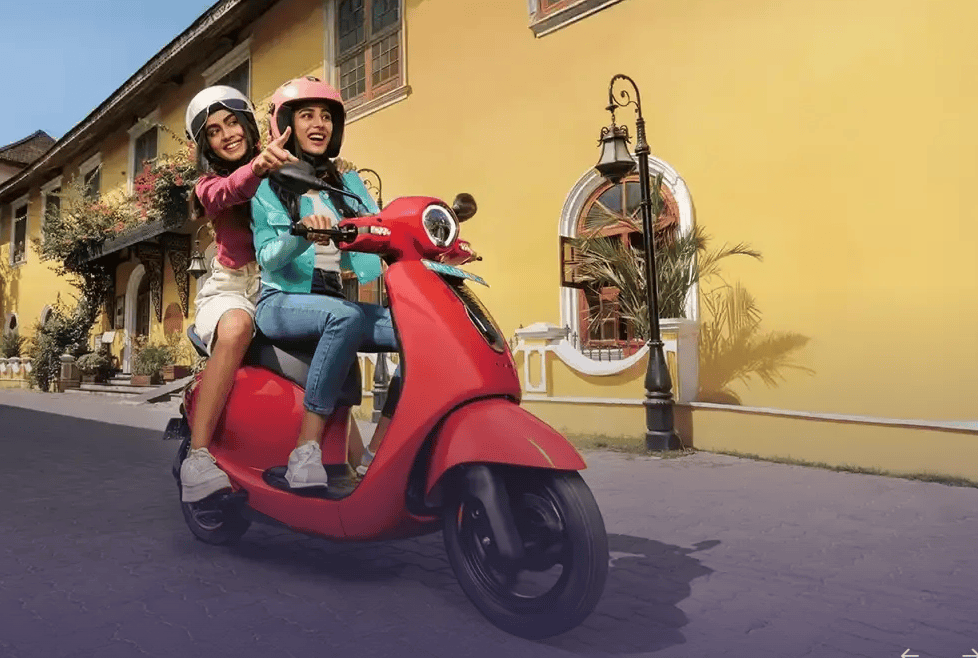
ajaj Chetak has recorded a strong jump in sales in July 2026, emerging as one of the key growth products in Bajaj Auto’s two-wheeler portfolio. According to the latest sales figures, the electric scooter sold 47,184 units in July, compared with 11,584 units during the same month last year. This represents a year-on-year increase of about 307%.
The performance also marks a significant improvement over the previous month. In June 2026, Bajaj sold 40,376 units of the Chetak. July sales were therefore around 17% higher on a month-on-month basis, indicating that demand for the electric scooter continued to strengthen during the month.
Bajaj Auto’s overall two-wheeler performance was also positive in July. The company dispatched 1,65,747 two-wheelers during the month, compared with 1,39,279 units in July 2025. This represents growth of around 19% year-on-year. However, compared with June 2026, when the company sold 1,66,956 units, the overall monthly volume was slightly lower.
Within this broader portfolio, the Chetak stood out because of its rapid growth. The scooter has benefited from Bajaj’s strategy of offering the Chetak in multiple configurations and price points, allowing the brand to target customers with different budgets and daily commuting requirements.
The Chetak’s journey in the Indian market has also been unusual. The original petrol-powered Chetak became a familiar name among Indian families before disappearing from the market as consumer preferences shifted towards modern automatic scooters. Bajaj revived the name in 2019, but this time as an electric scooter.
The electric version has gradually expanded its presence in India’s growing electric two-wheeler market. Bajaj has continued to introduce different variants, giving customers more choices in terms of battery capacity, range and pricing.
One of the major developments behind the recent growth has been the introduction of the Chetak C2501. The model was positioned as a more affordable and family-oriented option, giving Bajaj a product aimed at buyers who may have previously considered conventional petrol scooters because of their lower entry prices.
The Chetak C2501 uses a 2.5kWh battery and has a claimed range of 113 kilometres on a full charge. Its starting ex-showroom price is reported at ₹91,504 in the latest Aaj Tak report.
The affordable model has helped Bajaj strengthen its presence across different price segments of the electric scooter market. An earlier industry analysis noted that the C2501 was launched at around ₹91,399 and helped expand the Chetak portfolio across several price points.
The C2501 is designed primarily for everyday city use. It offers basic features intended for regular commuting while keeping the price lower than some of the more premium Chetak variants. This approach allows Bajaj to compete for customers looking for an electric scooter without moving into the higher price ranges of the segment.
Bajaj has also expanded the Chetak range with a larger-battery C3001 variant. This model gets a 3.0kWh battery and has a claimed range of 131 kilometres. Its reported starting ex-showroom price is ₹1,14,270.
At the higher end of the range is the Chetak 35 Series. The scooter uses a 3.5kWh battery and has a claimed range of up to 153 kilometres. The starting ex-showroom price is reported at ₹1,24,157.
The different battery options are important because range remains one of the biggest considerations for customers buying electric two-wheelers. Buyers who primarily use their scooters for short city trips may prefer the smaller battery and lower price, while customers covering longer distances may consider the larger-battery versions.
The reported running cost is another factor attracting attention. According to the Aaj Tak report, charging the 3.5kWh battery of the Chetak 35 Series at home costs approximately ₹35, while the claimed range is up to 153 kilometres.
Actual charging expenses can vary depending on electricity tariffs, charging losses and usage conditions, so the reported figure should be treated as an indicative estimate rather than a universal cost for every owner.
The combination of lower running costs and a growing range of models is helping electric scooters become more attractive to urban commuters. The broader Indian electric two-wheeler market has also been witnessing strong growth, with industry data showing substantial increases in registrations during 2026.
Bajaj’s growing Chetak sales are therefore taking place against the backdrop of a wider shift in consumer interest towards electric mobility. Established manufacturers are increasingly competing with dedicated electric vehicle companies, making brand reputation, pricing, service availability and product reliability important factors for buyers.
The Chetak’s sales growth is particularly notable because Bajaj has been able to combine an established brand name with an expanding electric scooter portfolio. The Chetak name already has strong recognition among Indian consumers, and its electric version has allowed Bajaj to reconnect that legacy with the country’s changing mobility preferences.
The company has also been expanding production capacity for the electric scooter. An industry analysis published earlier in 2026 estimated Chetak production capacity at around 50,000 units per month and suggested that stronger demand could support further expansion.
July’s sales of 47,184 units came relatively close to that reported monthly capacity figure. If demand continues at a similar level, Bajaj may need to maintain strong production and supply-chain execution to keep dealerships adequately stocked.
The sales performance is also significant because Bajaj has been working to strengthen its position in the electric two-wheeler segment. The company has traditionally been better known for motorcycles, but the Chetak has increasingly become an important part of its electric mobility strategy.
The strong July numbers suggest that the scooter’s wider product range is finding greater acceptance among consumers. Instead of relying on a single premium model, Bajaj now has options covering a broader range of budgets.
The company’s pricing strategy is particularly important in a market where electric scooters compete not only with other EVs but also with petrol-powered scooters. For many consumers, the purchase decision depends on the initial price as well as the expected running cost over several years.
A lower entry price can therefore help bring more customers into the electric vehicle market. The C2501’s positioning appears to be aimed at exactly this group, offering a relatively accessible route into the Chetak family.
At the same time, Bajaj’s larger-battery models give the company an opportunity to target customers who are willing to pay more for additional range and features. This creates a wider product ladder within the same brand.
The 153-kilometre claimed range of the Chetak 35 Series is particularly notable for customers who place a high priority on reducing charging frequency. However, claimed range figures are measured under standardised test conditions and actual range can differ depending on riding style, traffic, weather, load and other factors.
The scooter’s growing sales also indicate that electric mobility is becoming less dependent on early adopters. Established brands such as Bajaj can use their existing dealership and service networks to make electric scooters more familiar to mainstream customers.
For consumers, the availability of multiple Chetak variants also means that the decision is no longer simply about choosing between an electric scooter and a petrol scooter. Buyers can compare battery size, claimed range, features and purchase price across several electric models within the same brand.
The Chetak’s July performance comes after a strong first half of 2026. In June, reports said the electric scooter had crossed the milestone of eight lakh cumulative sales, with more than two lakh units sold during the year up to that point. The sales pace had put the model on track to potentially cross four lakh units in a calendar year if momentum continued.
This cumulative performance provides context for the latest monthly numbers. The July result was not an isolated increase but part of a broader period of growth for the Chetak.
The revival is also important for Bajaj because competition in India’s electric scooter market remains intense. Manufacturers are competing on range, pricing, connected features, battery technology and after-sales support.
Bajaj’s approach has increasingly focused on balancing affordability with the established Chetak design and brand identity. The company appears to be targeting customers who want an electric scooter for regular commuting while also valuing the familiarity associated with a long-established automobile brand.
The growing sales could also strengthen Bajaj’s position against other established two-wheeler manufacturers. The electric scooter market has become increasingly competitive, with brands such as TVS, Ather, Ola and Hero offering products across different price segments.
Bajaj’s Chetak has managed to remain an important player in this environment, and the latest figures indicate that the company’s strategy of expanding its range is gaining traction.
The July sales increase of 307% is particularly striking because it compares with a relatively low base of 11,584 units in July 2025. Therefore, while the percentage growth is very high, the absolute sales figure provides a more useful indication of the scooter’s current market scale.
The month-on-month increase from 40,376 units in June to 47,184 units in July is also significant because it shows that demand improved even after the strong performance recorded in the previous month.
Whether this momentum continues through the remaining months of 2026 will depend on several factors, including production capacity, pricing, competition, consumer demand and the overall growth of India’s electric two-wheeler market.
The company may also continue refining the Chetak lineup as consumer expectations evolve. Electric scooter buyers increasingly look for longer range, convenient charging, connected features and dependable after-sales support.
Bajaj’s ability to offer different battery configurations gives it flexibility in responding to these expectations. The C2501 focuses on affordability, the C3001 offers a balance between price and range, while the 35 Series targets customers looking for a larger battery and longer claimed range.
The price differences between these variants allow buyers to select a model according to their daily travel requirements rather than paying for features or battery capacity they may not need.
For Bajaj, the rapid growth of Chetak sales also has significance beyond the scooter itself. The performance can help the company establish a stronger identity in electric mobility and build consumer confidence in its broader EV strategy.
The electric two-wheeler industry is still evolving, and manufacturers are closely watching customer behaviour. Sales trends such as the Chetak’s July performance can provide useful signals about the price points and product configurations attracting buyers.
At present, the numbers clearly show that Chetak has become a major growth driver within Bajaj’s two-wheeler portfolio. Its 47,184-unit July sales figure represents a substantial increase over both the previous year and the previous month.
The combination of multiple battery options, a wider price range and the growing popularity of electric mobility appears to have helped the scooter strengthen its position. Bajaj’s ability to maintain production and continue offering competitive products will be crucial if it wants to sustain this momentum.
The Chetak’s latest performance also highlights a broader trend in India’s automobile market. Electric scooters are moving increasingly into the mainstream, and established manufacturers are responding by offering products at different price levels.
For customers considering an electric scooter, the Chetak range now provides several options, starting from the C2501 at ₹91,504 ex-showroom and extending to the larger-battery Chetak 35 Series. The claimed range across these variants goes from 113 kilometres to 153 kilometres, depending on the model.
Ultimately, July 2026 has emerged as an important month for Bajaj Chetak. With 47,184 units sold and year-on-year growth of approximately 307%, the electric scooter has demonstrated strong momentum. The next challenge for Bajaj will be to convert this rapid growth into sustained sales while continuing to balance price, range, features and reliability in an increasingly competitive electric two-wheeler market.